
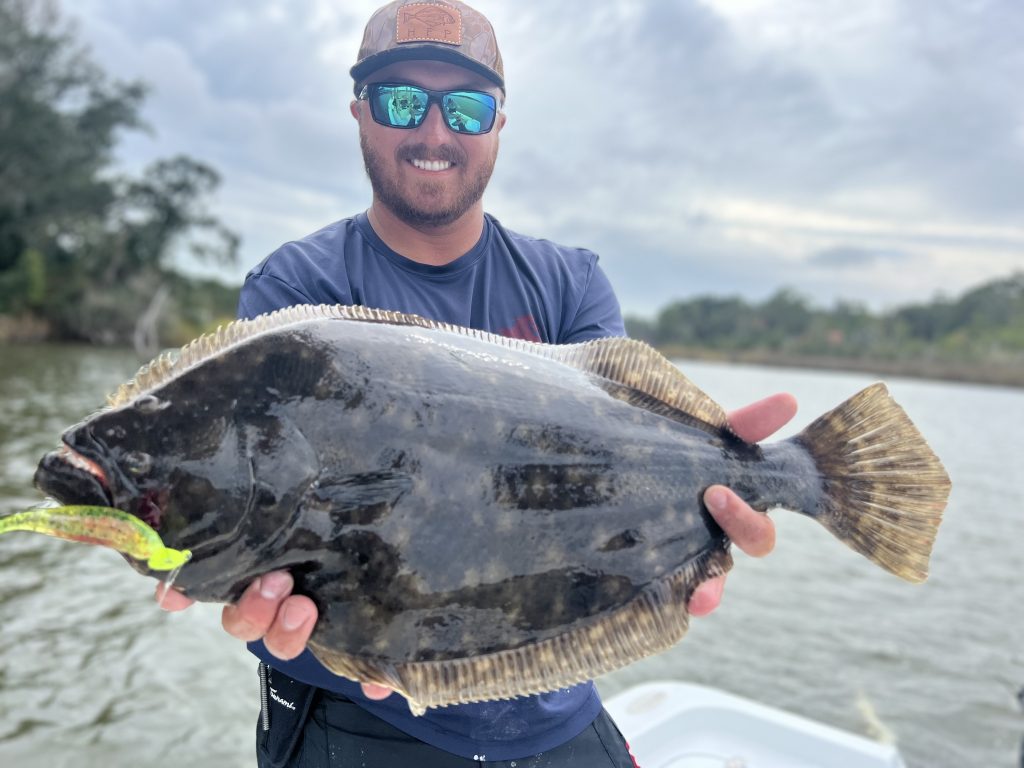
Flounder, one of the most fascinating and sought-after fish along the Gulf Coast, are extremely fun to catch and even more delicious to eat. These special fish inhabit various systems throughout our area and can be found almost anywhere if enough time is taken to understand the ecosystem at hand. However, targeting and catching flounder hasn’t always been as successful as it has been in recent years. Today, we focus on these beautiful flat fish by interviewing avid local fisherman and marine biologist, Dr. Dylan Kiene. Dylan has been studying flounder for almost seven years, and in this article, he shares his insights on how to catch flounder from both a fisherman’s and scientist’s point of view.
The Birth of “Dr. Doormat” – Fishing for Science
Dylan, also known as “Dr. Doormat,” has been fishing for flounder in our area since before he can remember. His dad worked at the Dauphin Island Sea Lab and had a keen love and passion for the flat fish, which he passed on to Dylan. When asked about how and when he started flounder fishing, Dylan recalls early memories of his dad coming home from work with flounder he had caught throughout the day or on the way home. Dylan quickly began following in his dad’s footsteps, developing his own love for flounder. He shares memories of going down to Dauphin Island and Fowl River, chasing flounder any way they could. They fished for flounder from powerboats, kayaks, and on foot along the beaches and banks. Nothing could stop Dylan and his dad from targeting flounder.
The passion his father had for fisheries, and flounder in particular, sparked a fire in Dylan to study our local flounder populations, especially as their numbers steadily dwindled over the last two decades. Dylan graduated from Spring Hill College in 2017 and began working as a research technician for the USA/DISL Fisheries Ecology Lab. He started his doctorate and career in marine sciences with the University of South Alabama in 2019. Dylan studies many aspects of the Alabama flounder population, focusing on Southern Flounder (Paralichthys lethostigma), which constitute the majority of annual fisheries landings. His research focuses on real-world population numbers, migratory behavior, spawning patterns, age structure, and reproductive potential.
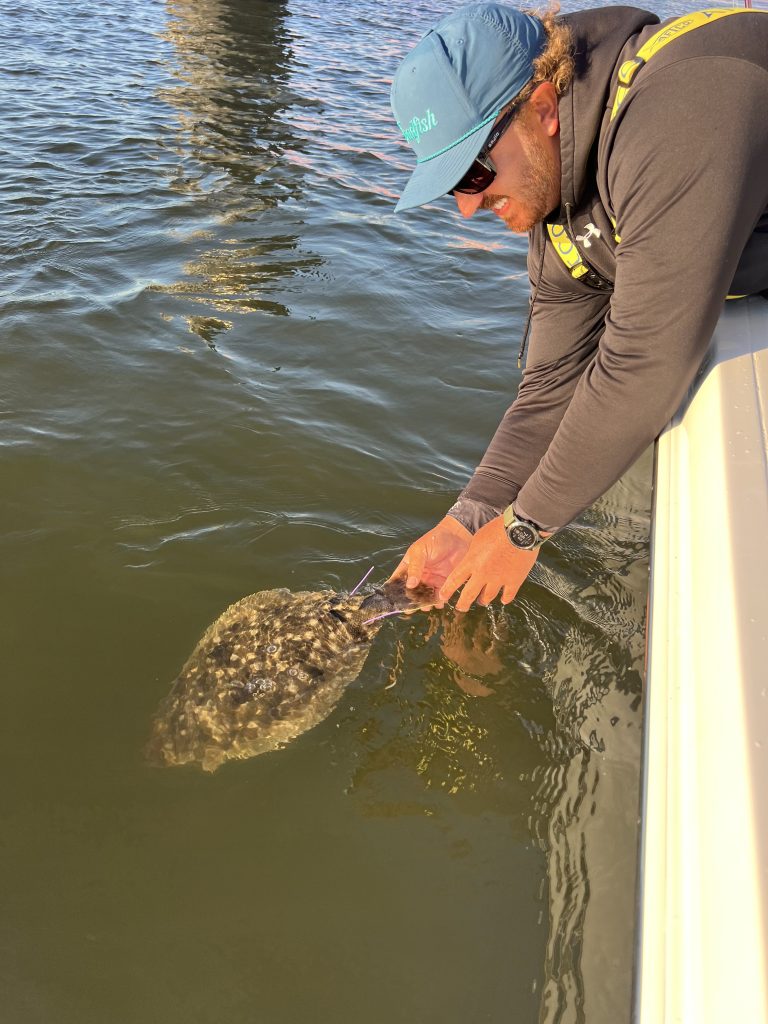
After the Deepwater Horizon oil spill, many feared it could have dire effects on our marine ecosystems, and some pointed fingers at the spill as the main reason for the declining flounder populations. However, scientific data and interviews with fishermen suggested other contributing factors. To address this, the State of Alabama, in partnership with the CCA and Dauphin Island Sea Lab, began a flounder tagging program. This included an acoustic tagging study and a conventional tagging study, eventually leading to a flounder hatchery program in coastal Alabama. Dr. Doormat worked with local inshore fishing guide Capt. Richard Rutland of Cold-Blooded Fishing to conduct 20 targeted flounder tagging trips per year from 2019 to 2023. The early years of tagging reflected the poor state of the fishery, with 8-hour days often yielding only 4 taggable flounder, sometimes none. However, as the fishery improved, they began averaging 15 flounder per 6-8 hour trip, with some days capturing and tagging 30-40 flounder, primarily on artificial lures. Currently, Dr. Doormat and Capt. Rutland average over 300 tagged and released flounder per year for this initiative.
Dylan’s involvement in this program and his specialized study of flounder have led to new discoveries and answers regarding the decline and rebound of the flounder population. Dylan is close to finishing his dissertation on flounder and is excited to share his findings. His extensive study has not only enhanced his understanding but also improved his flounder fishing skills. Dylan shares tips and tricks on how to catch flounder, including tactics, gear, and baits he uses.
How to Catch Flounder
When asked how to catch flounder, Dylan’s immediate response was, “The most important thing with how to catch a flounder isn’t the fancy rods, reels, artificial lures, and jig heads. I use all of that stuff, but you don’t really need all of that to catch them. All you need to know is that whatever bait you decide to use… whether that’s live bait, dead bait, or artificial lures, it needs to be on or near the bottom.”
The key to catching flounder is maintaining contact with the bottom, regardless of the type of retrieve.
The next critical factor is the tides. Dylan emphasizes that understanding patterns, tide charts, and water movement is crucial for successful flounder fishing. He believes that planning your fishing day around the tides is essential.
“Basically you can plan your whole day based on the tide, I think tide is king when it comes to triggering when and where the flounder feed.”
Dylan also highlights the importance of habitat, noting that flounder’s favorite habitats vary seasonally. He targets docks, rocks, poles, points, oyster/shell bottom, slopes/ledges, creek mouths, and grass lines/marsh habitats. Finally, he advises anglers to pay attention to tides and wind to figure out the patterns that work best for their fishing area.
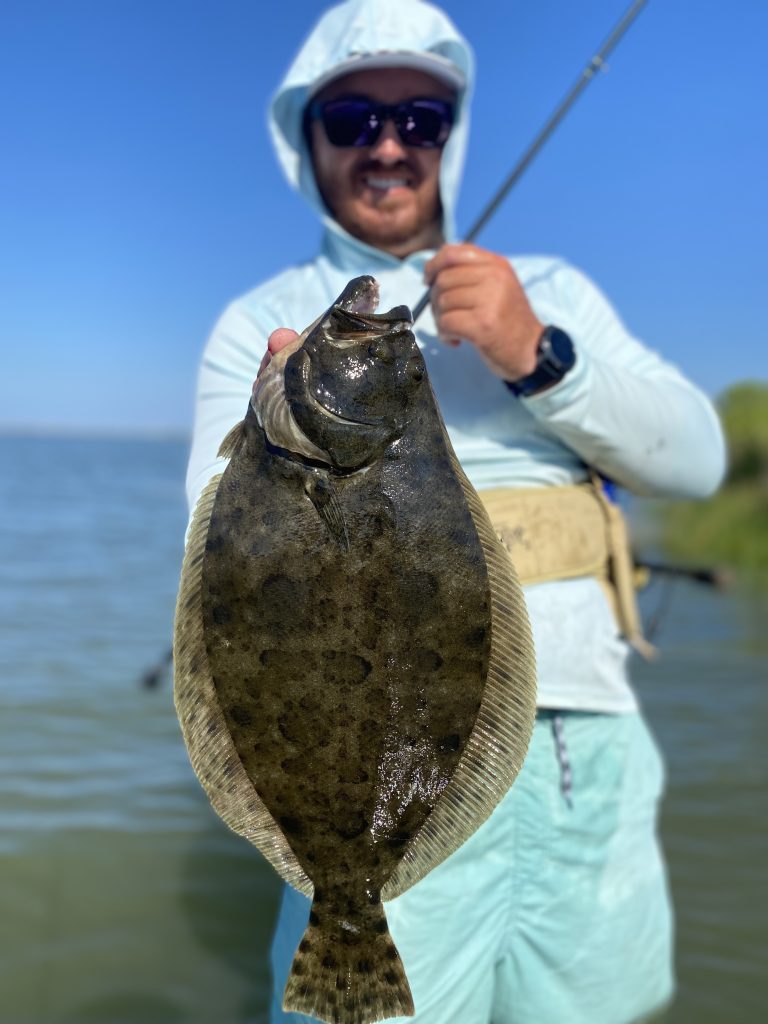
“Start tuning in your tide. Paying attention to the tides and wind and kind of figure out the patterns that work for whatever area you’re fishing.”
Dylan notes that despite the recent uptick in flounder, there’s still a shortage of larger fish, specifically those weighing 4-5 pounds.
“The majority of the fisheries landings in the state of Alabama are two-year-old fish, and that fish is about 17-18 inches long. The thing that we want to see happen and kind of haven’t seen yet is those older age classes fill out. Those 19-20 plus inch fish, depending on what time of year you catch it, is somewhere in the 4-5 pound range, and those fish are still quite rare, with the bigger fish (22+ inches) being even more rare.”
Dylan encourages anglers to adopt a conservation mindset, harvesting only what they need for a meal or two and releasing the rest to ensure the fishery’s health.
“You know, as anglers, it’s important to not go out there with the mindset that, ‘Hey, we’re going to go kill as many flounders as we can today!’ A better approach may be to say, ‘Hey, we’re going to go harvest some flounder for a meal or two today, and we’ll leave the rest of what we catch in the water. That way we can come back and they’ll be here when we want another flounder dinner next time.’”
Dylan supports this approach by pointing out that 95% of tagged fish are recaptured in the same system they were tagged in.
“So they have what is called an extremely high “system fidelity” which essentially means that they associate with a particular system. Meaning that in most cases, for example, it’s July, if there’s a flounder in Bayou La Batre, AL and that fish survives through the next July, most likely it will find itself back in the Bayou that same month the following year.”
Flounder Gear, Rigging, Terminal Tackle
Over the years, Dylan has perfected his gear for targeting flounder and developed a line of “Dr. Doormat Custom Rods.” If interested in a custom rod designed by Dylan Kiene, you can contact him at 251-623-0587, or check out @dr.doormat on Instagram. For factory rods, Dylan prefers Medium Fast, Medium Extra Fast, or Medium Light Fast action rods, typically 6’6” to 7’6” in length. He mentions St. Croix, G. Loomis, and Ugly Stik as good options but notes that custom rods offer features like sensitivity and backbone that are often lacking in factory rods.

“I got into rod building specifically because I could never find the right rod that I wanted. Which is something that is basically on the Medium Light – Medium range in power with an extremely sensitive tip, paired with a ton of backbone and parabolic actions. You need the sensitivity in the tip to feel the bite and the backbone in the rod to bury that hook on the hookset, and a lot of times it can be hard to find a factory made rod that meets these expectations in a nice way.”
Dylan pairs these rods with size 2000-3000 spinning reels or size 70-200 baitcasting reels. He prefers Suffix 832 braid, usually a 20-30# mainline connected to a 20-40# fluorocarbon leader, with AFTCO’s Saiko Pro as his fluorocarbon of choice. For live bait rigging, Dylan recommends the Carolina rig with a 1/2oz to 5/8oz egg sinker, 20-30# leader, and an Owner Hooks 1/0 SSW hook. He prefers finger mullet as live bait due to their erratic action.
“When you throw a finger mullet out on a Carolina rig, the bait goes straight to the bottom, and that finger mullet DOES NOT want to be down there. As you’re fishing your bait, that finger mullet is constantly struggling against the egg sinker to get back to the surface. All of that swimming around–stirring up sand and mud and making erratic movements on bottom–is felt by any flounder in that area, and usually they will give up their ambush spot to come smoke a live finger mullet banging around on the bottom.”
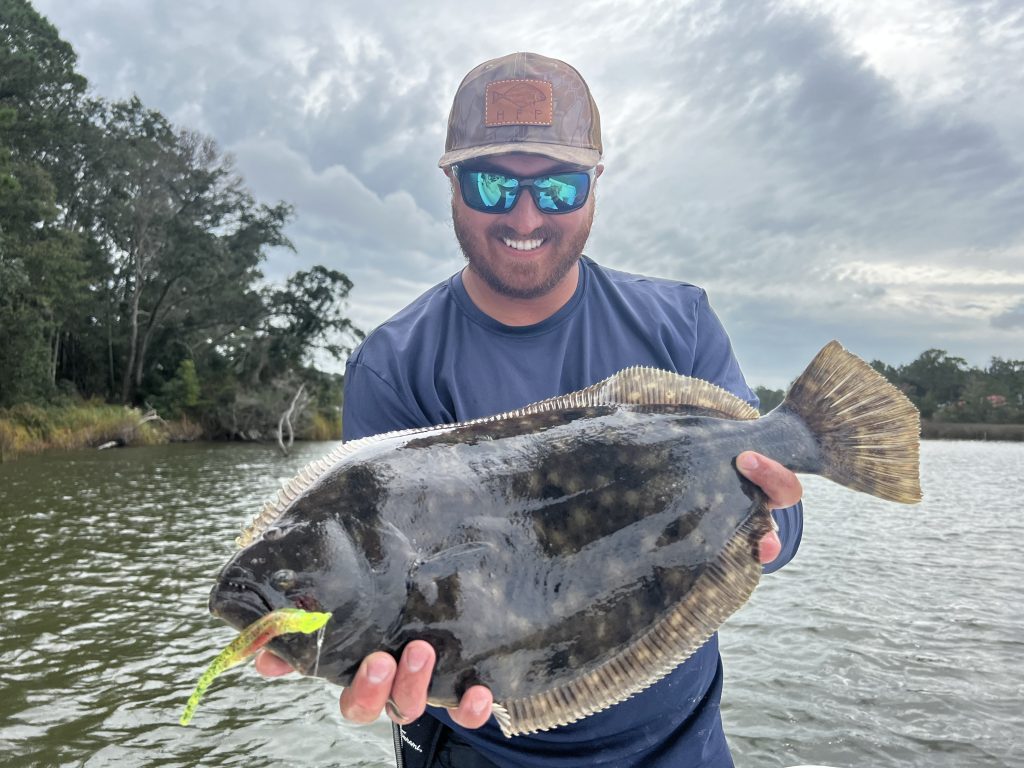
For artificial lures, Dylan’s favorites include Gambler Lures 6” Flapp’n Shad, Z-Man Fishing Products 5” Scented Jerk ShadZ, 4” DieZel Minnow, Fishbites Fight Club Series Lures, and Down South Lures Super Model. He emphasizes the importance of scented lures and mentions Pro-Cure Baits as a top choice, with Mullet, Menhaden, Inshore Saltwater and Flounder Pounder as his favorite “flavors.” Dylan’s preferred jig heads are custom Skyline Jigs and Eye Strike Fishing Texas Eye jig heads, with 1/4oz and 3/16oz sizes being the most versatile.
What Do You Appreciate About Flounder?
When asked this question, Dylan perked up from working on a custom rod he was doing during the interview and gave me a grin.
“A flounder is just such a cool and exciting fish to see–so different from the others. It’s a flat fish. It occupies a really unique niche in the ecosystem. It’s this benthic ambush predator that’s kind of cryptic and that sneaks around…As an angler, when you fool a fish like that, especially on an artificial lure, it’s just really exciting. The power and aggressiveness in the strike never gets old. I also love flounder because, unlike speckled trout, redfish, and many other species, it doesn’t matter what time of day you fish for them. Other fish are very daylight sensitive, meaning sunrise and sunset is usually the best time to go for them. But flounder don’t care one bit about the light and the heat. They’ll bite in the morning, high noon, afternoon, and evening. It really just depends on the tide and conditions that you’re given and you can just plan around the best tide no matter what time it is, I love it.”
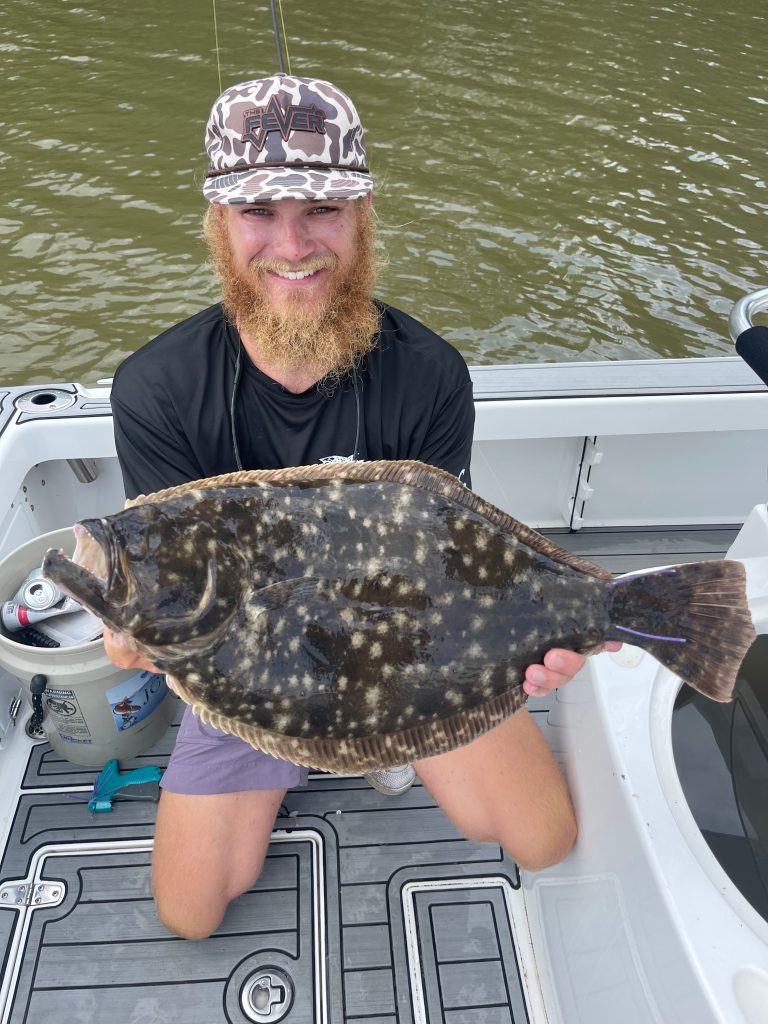
Then there’s a pause, and he thinks about the fish that he loves and cares about so much, something he’s given years to.
“I just also have so much respect for how resilient they are as fish, and how the population has continued to persist and even now is coming back some. I mean, it’s really just an amazing fish.
“Also, it’s a very tasty fish!” he adds with a chuckle, “One of my dad’s favorite meals was to have pan fried flounder, so it’s kind of a sentimental fish meal for me. And if you ever see a kid or someone catch a flounder and bring it up to the boat, they get so excited, especially if they’ve never seen or caught one before There’s just something about them that excites people. They’re just a really amazing fish.”