

A food plot can look great in March and still be headed for trouble by May. The clover may be thick, the deer may be using it, and the field may finally feel like it is paying you back for the lime, seed, fertilizer, and weekends you put into it. Then the warm-season weeds start showing up. Dog fennel slips through in scattered stems, ragweed starts filling gaps, ironweed or vervain appears along the edges, and before long the plot is no longer just clover, jointvetch, cowpeas, soybeans, or whatever else you were trying to grow. It becomes a mix of what you planted, what the seed bank gave you, and what the weather allowed to take off. That is when selective herbicides for broadleaf weeds can become an important part of keeping desirable forage healthy without wiping out the entire plot.
That is where a lot of hunters get frustrated. They do not necessarily want to start over, because starting over means losing forage that may still be feeding deer and turkeys. But they also do not want to stand there and watch a few aggressive weeds take over a plot they worked hard to build. Glyphosate may wipe the slate clean, and in some cases that is exactly what a landowner needs, but it is a blunt tool when the goal is to save the crop that is already there. If the clover is still worth keeping, if the beans are still growing, or if a jointvetch stand is doing most of what you wanted it to do, killing everything can feel like throwing away progress.
That is the space where selective herbicides become useful. They are not magic, and they are not a replacement for knowing what is growing in the field, but they give landowners a way to control certain problem plants without always having to reset the whole plot. According to Dr. David Russell, an associate Extension professor for crop, soil, and environmental science with Auburn University, the first step is not choosing a jug from the shelf. It is deciding what is actually out of place. Russell has a PhD in weed science, a master’s degree in agronomy, and a background in landscape architecture, but he also hunts and manages land himself, which matters because food plot weed control is not the same thing as managing a hayfield, a row crop, or a golf course. In wildlife openings, the goal is not always perfect cleanliness. The goal is useful plants, healthy soil, and wildlife using the plot.
“What one may see is an undesirable, somebody else may love that plant there in that particular space,” Russell said. “I don’t think our food plots need to fit a look.”
What Counts As a Broadleaf Weed?
The word weed sounds simple until you start managing for wildlife. A weed, as Russell explained, is often best understood as a plant out of place. That means the same plant may be a problem in one field and useful in another. Some hunters may not mind ragweed in certain areas because it can provide browse, seed, insects, and structure. A turkey hunter may see value in a little mess if poults can move through it and feed. A deer hunter trying to maintain a clean clover stand may look at that same plant and decide it is competing too heavily with what he planted.
That is why broadleaf weed control starts with goals. If a landowner plants clover, jointvetch, soybeans, cowpeas, or other legumes, he is already managing for broadleaf forage. The weeds he wants to control may also be broadleaf plants, which makes the problem more complicated than simply spraying something labeled for broadleaf weeds. Clover is a broadleaf. Beans are broadleaf. Many of the best wildlife forages hunters plant are broadleaf plants. Choosing selective herbicides for broadleaf weeds requires knowing which broadleaf plants you want to remove and which ones you need to protect. So when a landowner says he wants to kill broadleaf weeds in a food plot, what he really means is that he wants to kill the wrong broadleaf plants while keeping the right ones.
That is the part that gets people in trouble. A product that does a good job cleaning broadleaf weeds out of a grass pasture may be a terrible fit over clover or another legume-based food plot. A herbicide that is useful in one setting may injure the very forage a hunter is trying to protect in another. Russell’s point was not that hunters should avoid herbicides, but that they should stop thinking of them as one-size-fits-all products. Broadleaf weed control in wildlife plots requires knowing the target weed, knowing the desirable forage, and understanding whether the herbicide fits that specific situation.
2,4-DB And Why Hunters Talk About It
One of the broadleaf-selective herbicides hunters most often hear about is 2,4-DB, commonly recognized through products such as Butyrac 200. It gets discussed around clover, alfalfa, soybeans, peanuts, and other legume systems because many of those plants can tolerate it when the product is used correctly and according to the label. For a hunter with a clover plot that is still worth saving, that can be a big deal because there are not many broadleaf herbicide options that can be used around desirable broadleaf forage.
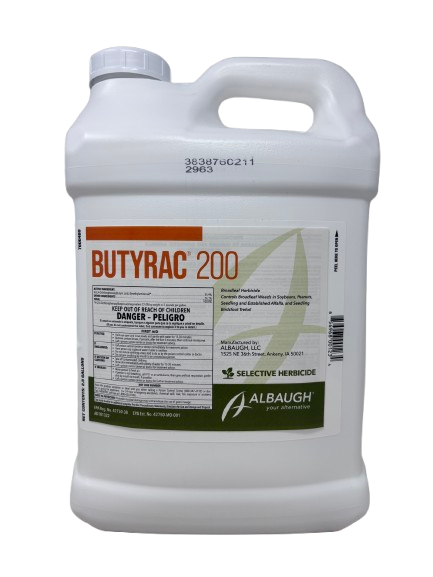
Russell said 2,4-DB is worth knowing because of how few good broadleaf-control options hunters have in legume plots. “2,4-DB is a good one to keep in mind, just because we don’t have a lot of options to control the undesirable broadleaves in clover,” he said. He also pointed to other legume systems where the same general issue shows up, such as cowpeas or other summer broadleaf forages. Among selective herbicides for broadleaf weeds, 2,4-DB is one option land managers often consider when they need to protect desirable legumes.
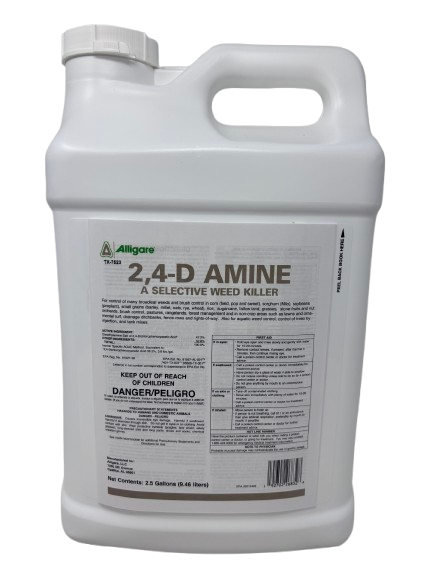
The important thing is that 2,4-DB is not the same as 2,4-D. That difference deserves its own full explanation, but the practical point is simple enough: confusing the two can cost a landowner a food plot. Many hunters are familiar with 2,4-D as a broadleaf herbicide used in grass systems, lawns, pastures, or other settings, but that does not mean it belongs over a clover plot. 2,4-DB is often the product land managers discuss when they are trying to control certain broadleaf weeds while preserving certain legumes.
Even then, 2,4-DB is not a cure-all. Russell pointed out that some tough perennial broadleaf weeds may not be controlled well by it, especially if they are too mature. Dog fennel is a good example. A landowner may spray too late, see the top curl, and assume he got control, only to watch the plant recover or return from the root system. That does not mean 2,4-DB has no place. It means hunters need to understand what it is good at, what it is weak on, and when another approach may be needed.
Triclopyr-Type Products And Tougher Broadleaf Weeds
Some broadleaf weeds are harder to deal with because they are perennial, woody, tall, or simply not very sensitive to the products hunters first reach for. Dog fennel was one of the main examples discussed in the interview because it is common, competitive, and not especially useful as wildlife forage. Mowing may make it look better for a little while, but removing top growth does not necessarily kill a plant that has a strong root system. In those cases, long-term control often requires getting the right herbicide into the plant at the right growth stage.
Russell said chemical control is often the most effective path for those kinds of weeds because the goal is not just to burn down the top of the plant. “You’ve got to get that herbicide translocated through that plant, so it can kill the woody root,” he said. That is the difference between making a weed look sick for a few weeks and actually getting long-term control.
For dog fennel and similar tough broadleaf weeds, Russell said he personally likes triclopyr-type chemistries. “For dog fennel, I’m thinking the triclopyrs and fluroxypyrs, or ever dicamba type products,” he said. These products are often used on woody or perennial broadleaf plants, depending on the site, target weed, and application method. In food plot settings, that may mean spot spraying, treating patches, or using a targeted approach rather than broadcasting over the entire field. The point is not that every clover plot should be sprayed with triclopyr. The point is that some broadleaf weed problems are better handled with products that fit woody or perennial targets.
That distinction is important because a lot of food plot mistakes come from using a familiar product on an unfamiliar problem. A landowner may know a herbicide works on some broadleaf weeds and assume it will work on all of them. He may also assume that if a product injures a weed, it will eventually kill it. With large perennial weeds, that is not always true. If the herbicide does not move through the plant and affect the root system, the visible injury may not add up to lasting control.
Combination Products And Other Options
Russell also mentioned that some broadleaf herbicide products may include more than one active ingredient, such as combinations involving triclopyr, fluroxypyr, dicamba, or other chemistries. These products can broaden control or improve performance on certain target weeds, but they also require more caution. The more complex the product, the more important it becomes to understand the label, the use site, crop safety, and any restrictions on future plantings.
That is especially true for hunters because wildlife food plots are often mixed or rotational by nature. A field may be clover in spring, a summer legume later, and a fall mix after that. A landowner may want brassicas, cereal grains, clover, beans, peas, or other forages in the same opening at different points in the year. A product that works well for cleaning up a grass pasture may not fit that kind of rotation. If it injures legumes or leaves enough carryover to affect the next planting, the landowner may solve one problem and create another.
Some legume-friendly products outside the 2,4-DB conversation may also have a place in certain food plot systems. Russell mentioned products such as Pursuit, which is based on imazethapyr, as an example of a herbicide that may fit some legume situations. “Pursuit, is another option if you’ve got those summer legumes,” he said. “It is selective to maintain a lot of our legumes.” But again, the lesson is not that every hunter needs to memorize a chemical catalog. The lesson is that broadleaf weed control has options, and those options need to be matched to the forage, the weed, the season, and the label.
Finding The Right Products
Once a landowner knows the target weed and the herbicide that fits the situation, the next challenge is finding the product in a practical size. Local co-ops and feed stores may carry common herbicides, but some selective herbicides for broadleaf weeds can be harder to find, especially for hunters who only need enough to manage a few food plots.
That is where a supplier like Chemical Warehouse can be useful. For landowners looking for products such as 2,4-DB, triclopyr-type herbicides, or related application supplies, ordering online can save time compared to driving from store to store. The convenience is helpful, but it should come after the homework. A product should be purchased because it fits the weed, the forage, the label, and the timing, not just because it sounds familiar.
Use Extension Before You Guess
Russell encouraged landowners to use the Extension resources available in their state, and that may be the best advice in the whole discussion. Every land-grant university has an Extension system, and county or regional agents can often help with plant identification, herbicide questions, sprayer calibration, and management planning. In Alabama, that means landowners can reach out through Alabama Extension or Auburn University resources, but the same general help exists in other states through their own land-grant systems.
“We have trained professionals,” Russell said. “That’s what we do, is to help walk you through learning what this plant is.” That kind of help can be especially valuable when choosing selective herbicides for broadleaf weeds because the margin for error can be small. If a landowner is trying to take a broadleaf weed out of a broadleaf food plot, guessing can get expensive. A few clear photos, a conversation about goals, and a label check can prevent a lot of wasted time. Extension agents can also help landowners understand whether a plant is really a problem, when it should be treated, and whether a mechanical, chemical, or targeted approach makes the most sense.
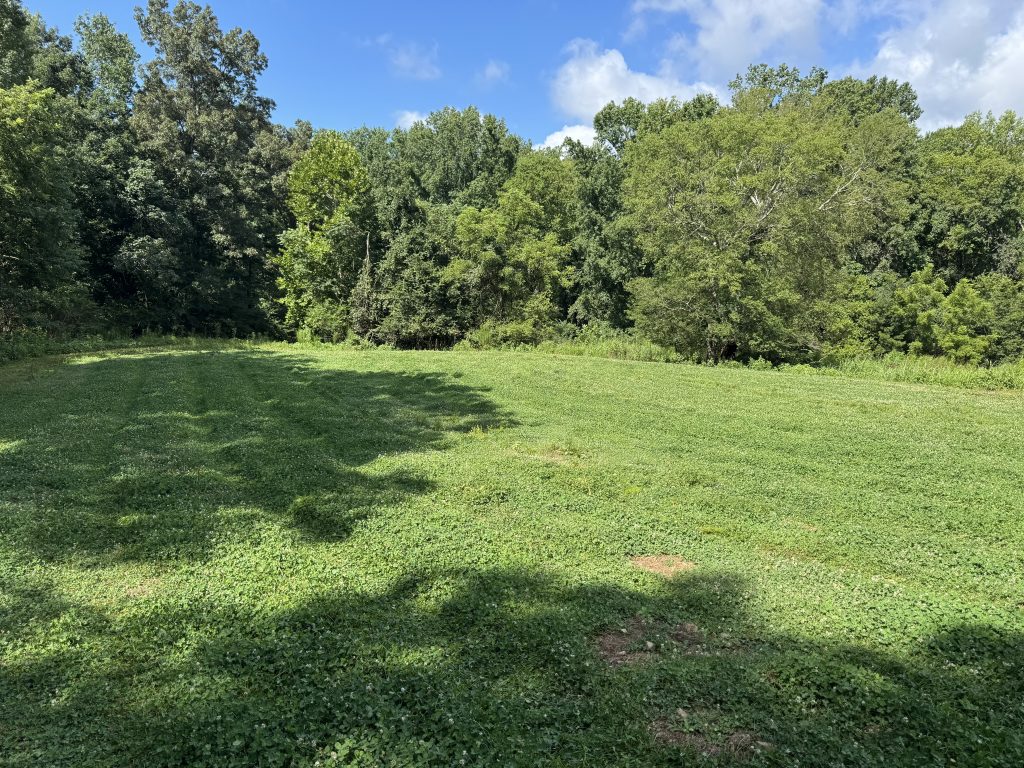
Food plot management does not have to be a chemistry exam, but it does require some humility. If you do not know what the plant is, find out. If you are not sure whether the herbicide fits the crop, ask. If the label raises questions about rotation or soil activity, slow down before you spray.
Spray Smarter, Not Harder
Selective herbicides for broadleaf weeds are not about making every food plot spotless. They are about giving hunters another way to manage the plants that truly interfere with their goals. Sometimes that means protecting clover from a broadleaf weed that is beginning to take over. Sometimes it means spot spraying a few patches instead of killing the entire field. Sometimes it means choosing not to spray at all because the so-called weeds are providing structure, browse, seed, or insects that wildlife can use.
Russell’s simplest advice may also be the most important: “Read those labels. Everything that you need to know about proper use of that product is on the label.” That means rates, protective equipment, use sites, crop safety, plant-back restrictions, and application rules all need to be checked before a landowner sprays anything.