
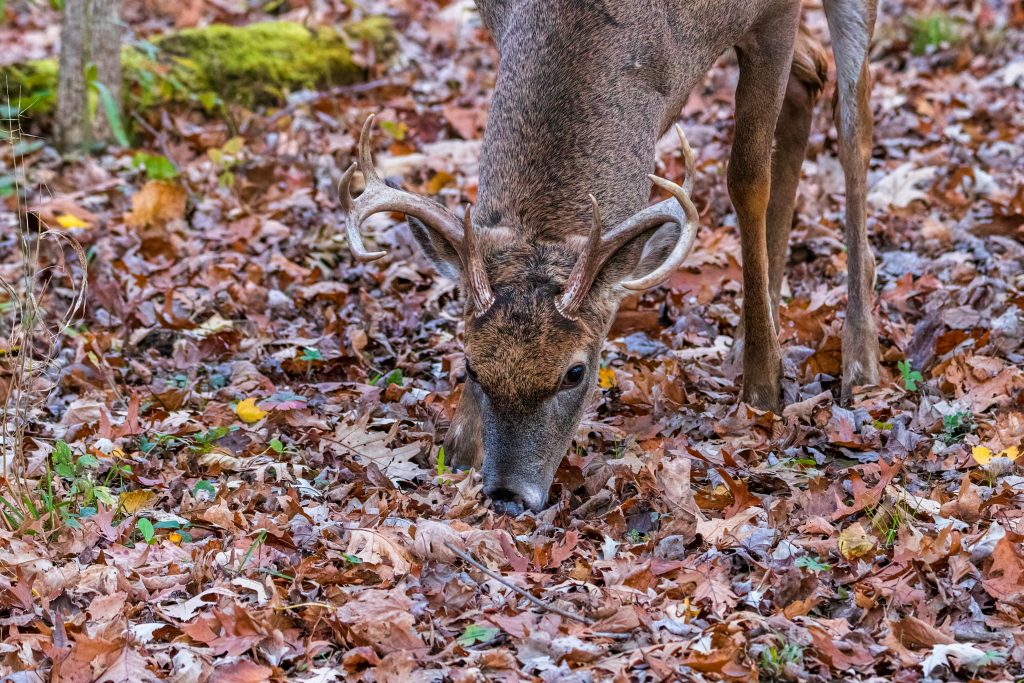
The best time of the year to shoot deer is a frequent topic of discussion in Great Days Outdoors editorial meetings.
Some of us believe that the first weekend of archery opener is hands-down the best time of year for killing big bucks. State Deer Program managers in Tennessee, Kentucky, and South Carolina agreed in a recent article we did on Trophy Velvet Hunting.
Others insist that “rutcation” is as good or better, and has the benefit of being much cooler in the deep south. And there is plenty of data recorded by plenty of state, federal, and private deer researchers that supports this belief with buck harvest data.
But we all agree on one thing, deer hunting quickly becomes difficult in the fall. After deer are disrupted from their summertime patterns by the first onslaught of human activity, but before rut kicks in, hunting can be tough. The deer have plenty of acorns to eat, and the woods are still thick with vegetation. Without hormones to cloud their judgment, many deer are content to hang tight to cover and enjoy the good life. As an (in)famous deer hunter once told me, “Deer only have three things on their mind: hiding, eating, and procreating. And this time of year…they’re not procreating.”
Especially in the thick-n-gnarly south, hunters often rely on some sort of attractant to pull deer out of the swamps and thickets they inhabit. In this article, we’ll go over some of the top natural attractants that deer congregate around, and also discuss how to “make your own luck” with some man made attractants.
Natural Deer Attractants
Deer are fairly large animals, and herbivores. Plants, as anybody who has ever dieted knows, are low in calories. Deer therefore need to eat a lot of plants, around 4 lbs of browse per 50 lbs of body weight per day. Understanding deers’ food habits is crucial for early-season success.
Deer Browse
Many fall deer hunting articles start and end with acorns. No essay on fall deer attractants is complete without that discussion, but before we get to that it’s important that hunters realize something important about deer. They naturally eat the varied diet that all of our primary physicians recommend we eat. Examine deer stomach contents, and you will always…always…always find browse.
Rather than trying to familiarize yourself with each of the thousands of plants that deer have been documented browsing, it’s better to understand browse in broad strokes. Do you enjoy the woody stems of asparagus, or lettuce stalks? Neither do deer. They prefer the tender shoots of plants to the woody bits. They’re also browsers, like goats; not grazers, like cattle.
If you’re looking for food sources, ask yourself what areas of your property get light and water, and have lots of fresh growth. Fresh burns are excellent. Streamside Management Areas (SMAs) through timber tracts or clear cuts can be good. Creek banks can be excellent, since sunlight can access the banks and moisture content is high. Something as simple as a gap in the canopy letting in light can create a small thicket of dewberries or smilax that deer find highly attractive.
Often, you’ll be able to identify browse areas by watching deer move through the area. Barring that, you can often detect browsing activity by closely examining the end shoots of vegetation. If it looks torn off, that’s deer. If it looks snipped, it’s rabbits.
Mast, Hard and Soft
While browse is a deer’s bread-and-butter, it can be difficult to capitalize on for a hunter. Browse is something that deer can pick up casually throughout the day, one mouthful at a time as they bed and travel. Mast, on the other hand, is very different.
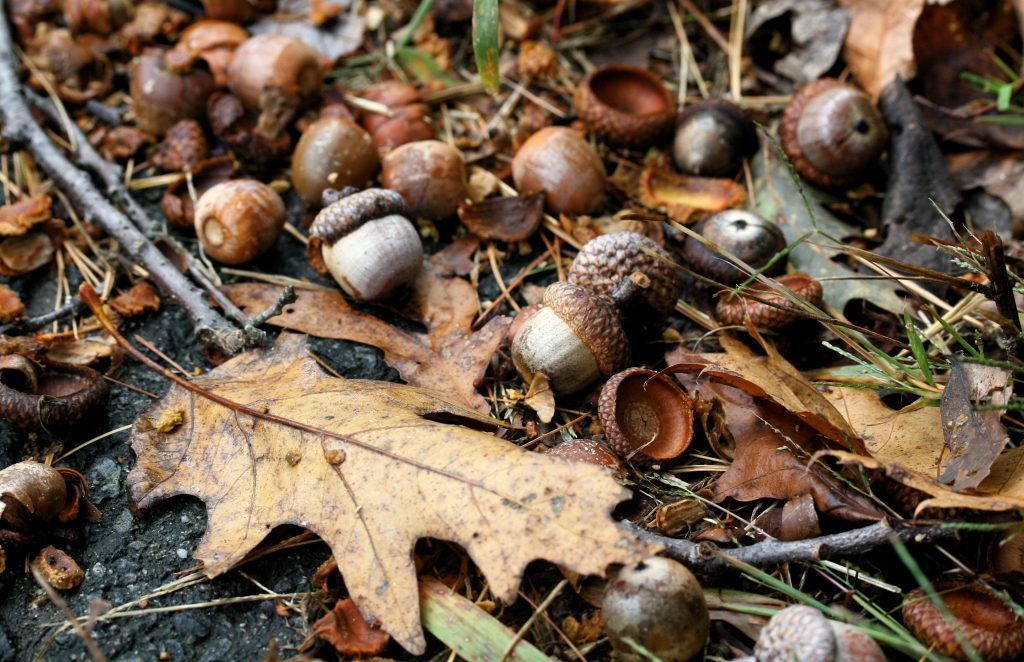
Whether it’s soft mast (fruit) or hard mast (nuts and acorns) mast is not only a high-value food source, it’s “first-come, first serve.” A hot white oak or loaded persimmon tree drops a limited amount of fruit, not just throughout the season but each day. Deer cannot climb trees. All they can do is eat what has dropped. Whoever gets to an oak tree first since the last feeding gets the goodies.
This is huge for hunters. Deer will bed close to good mast sources so that they can hit them frequently. But not all mast trees are equal. How do you know which one to hunt? Easy. Let the deer tell you. My personal rule of thumb is to look for “three pile trees,” or oaks with at least three, fresh piles of deer droppings underneath the tree’s crown. You can spot these trees while moving at a fair clip through the woods if you look first for areas of the forest floor with bare dirt. Deer and other critters will displace the leaves under a really desirable tree, leaving the ground bare underneath the drip line of an oak’s canopy. If you find a tree with bare dirt and deer scat under it, don’t delay; hunt it immediately. It could go cold tomorrow.
Acorns are the quintessential deer mast tree. Most other nut producers safeguard the nutritious nut meat inside a shell too tough for a deer to crack. But there are exceptions. I’ve personally watched deer and feral hogs eat beech nuts, and blight-resistant chestnuts are frequently planted by land managers in an effort to add variety to a herd’s diet.
Soft mast producers are much rarer than oaks, but can be excellent hunting if they drop during your state’s deer season. I occasionally get the chance to hunt persimmon trees, crab apples, and honey locust trees, and provided that they’re dropping fruit and there’s a little sign underneath them, they almost always provide shot opportunities.
Manmade Deer Attractants
An understanding of how to capitalize on natural deer attractants should be a part of every hunter’s toolbox. But natural attractants have an inconvenient problem. They may be very convenient to the deer, but they’re not always convenient to the hunter! Browse areas can be difficult to hunt because deer often bed in the food. Oak trees don’t produce every year, and even if they do, they may not be as desirable as an oak you haven’t found yet!
Hunters looking for consistency and control are often well-served by taking matters into their own hands, and creating deer hot-spots where they want the deer to be.
Deer Mineral Licks
One of the easiest and most reliable ways to draw deer out of cover and into bow range is with a mineral lick. Remember what we said earlier about how deer naturally know to eat a variety of foods? Minerals such as salt, calcium, and phosphorus are vital to a deer’s health, but can be difficult to acquire in the wild, especially in commercial timber lands that have been subjected to decades or even centuries of management practices that leave soil depleted.
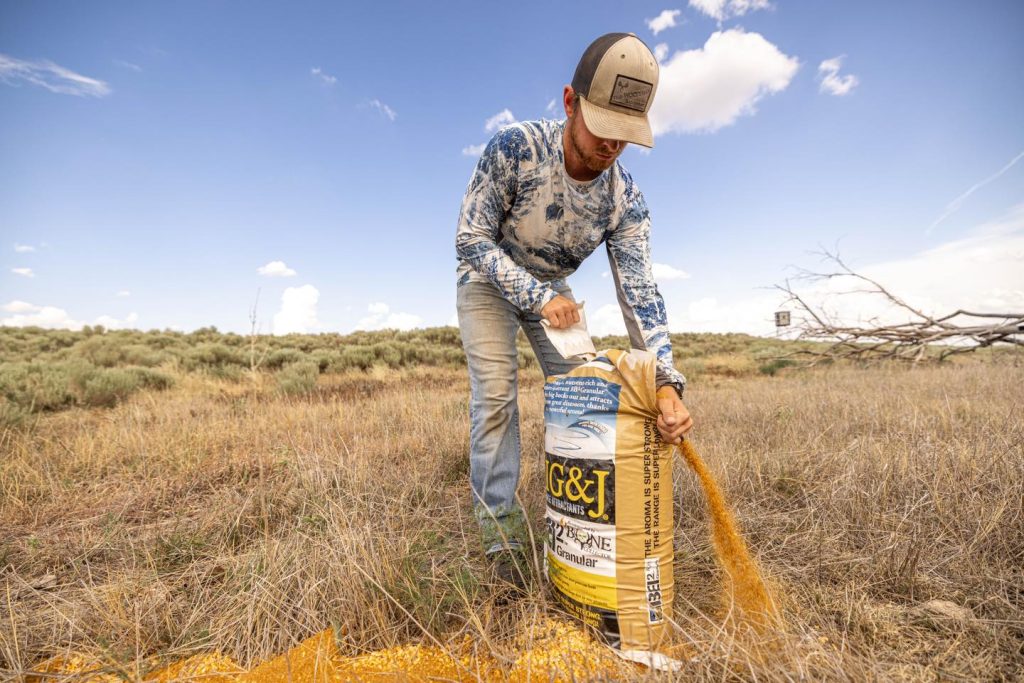
You can buy these nutrients from a local Feed and Seed and mix your own cocktail of minerals, but most hunters rely on the more convenient, prepared formulas such as those made by Big & J. Big & J offers a range of products designed to not only attract deer, but also provide essential nutrients for herd health. Their BB2 attractant, for instance, is highly regarded for its strong scent, which can draw deer from long distances. This product is formulated with a blend of ingredients that support antler growth and overall condition, making it a dual-purpose tool for hunters and wildlife managers. BB2 has been popular for years, and is available in liquid, granule, and block form.
Big & J’s BB2 mix has another draw for deer: protein. Especially in areas where acorn crops are sparse or nonexistent, protein can be highly in-demand in the fall. Protein and minerals become increasingly important as browse continues dying, and mast crops become scarcer. By combining the two into one source, you offer something that deer can’t afford to pass up.
How to Attract Deer to Your Lick
The best time of the season to put out a mineral lick or bait block is last season. The second best time is today. Deer need time to find attractants. If you’re looking to fast-track that process, here are some tips.
First, use an attractant with a strong scent. It is much easier for a deer to find a new food source by relying on their nose than their eyes. Big & J specifically is billed as a “long range attractant” due to its scent. I have personally found Big & J blocks on public properties by smell. Walk downwind of one, and you’ll notice the sweet smell.
Place attractants in places where deer will either naturally run across them (such as on trail intersections) or in places where the smell will travel to nearby bedding areas. I have had deer locate Big & J products the same day I put them out by placing them upwind of small marshes or palmetto thickets that I knew held deer.
Planting Chestnuts
Mineral licks and bait piles work awesome when you need to quickly attract deer to an area. But if you’re willing to make a longer term commitment, you can plant hybrid chestnuts on your property. Even if your property (or your neighbor’s property) has oaks, deer will bypass oak mast to eat chestnuts. In tests performed by Dr. James Kroll “Dr. Deer” at the Whitetail Research Institute in Nacogdoches, TX, Kroll reports, “Even though the wild deer at this location had never seen a chestnut in many generations, they got on the chestnuts within ONLY AN HOUR after we put them out. The deer ate the chestnuts 100:1 over the acorns! Chestnuts are deer’s preferred food.”
If you’re looking to plant chestnuts on your property, it’s important to choose blight-resistant hybrids, such as those offered by Chestnut Hill Outdoors. Dunstan Chestnut seedlings are highly popular in America due to their excellent nut quality, good tree form, and blight resistance. They are successfully grown from Maine and New York to Illinois and Wisconsin, and as far south as Texas and Florida. They can start producing nuts within 3-5 years in ideal conditions.
Conclusion
When it comes to successful deer hunting in the fall, understanding and using both natural and manmade deer attractants can give you a serious edge. Natural attractants like browse and mast are a big part of a deer’s diet and can guide you to the right hunting spots. But natural sources aren’t always dependable or convenient.
Combining your knowledge of natural deer behavior with the strategic use of manmade attractants allows you to tackle the challenges of fall hunting head-on. Whether you’re zeroing in on a productive oak tree or setting up a mineral lick, these attractants can help draw deer into your hunting area and increase your chances of bagging that big buck.