
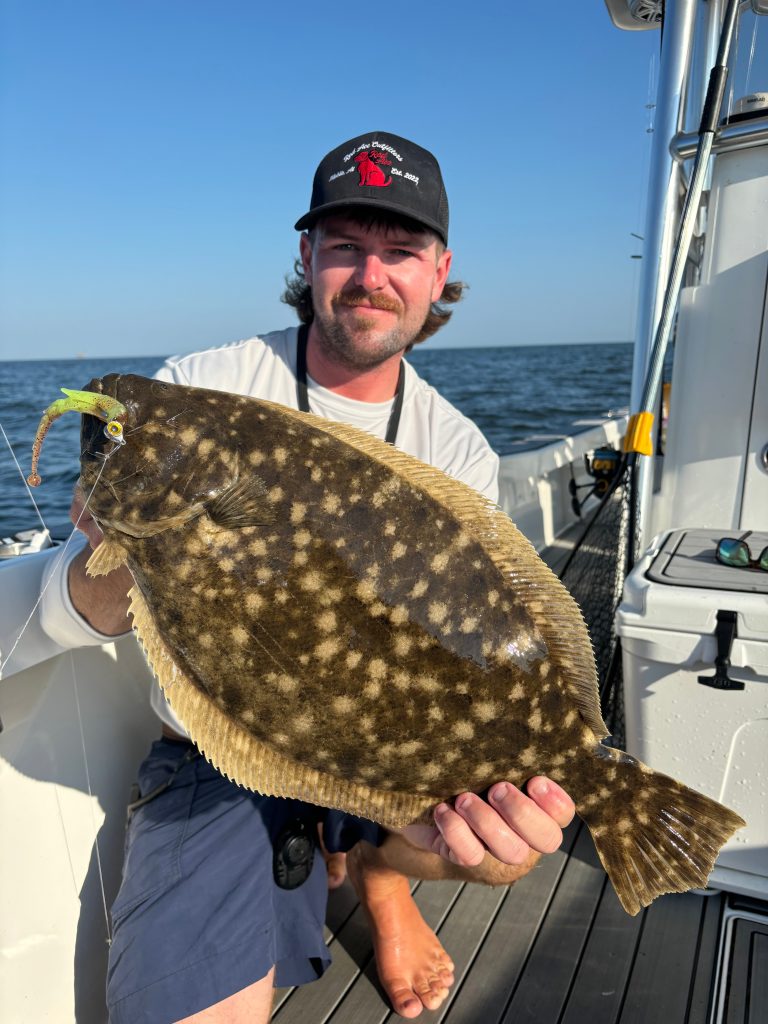
If you’re serious about flounder fishing, it’s time to talk structure. Captain Branden Collier, seasoned inshore angler and content creator, has spent years perfecting his approach to targeting these flat, bottom-dwelling fish, and he’s not shy about sharing what works. From marshes and docks to jetties and wrecks, Collier lays out exactly how to pick apart each type of structure to maximize your chances of success.
The Flounder Comeback: Why Now Is the Time
Flounder fishing along the Gulf Coast has improved dramatically over the last few years. While numbers were down after the 2010 BP oil spill, Collier notes that the recent seasons have been among the best in a decade. “If you caught five or six fish in 2011, that was a good day,” he says. “Now, if you’re only catching that many, it’s considered slow.” Although 2025 has been slightly less productive compared to the previous two years, the fish are still there. You just have to work a bit harder to find them.
Understanding Structure: What Holds Fish and Why
At the core of Collier’s approach is a simple concept: structure attracts bait, and bait attracts flounder. But not all structure is created equal. Flounder use submerged features for both ambush and camouflage. Key types of structure include marsh banks, creek mouths and drains, docks and pilings, jetties and rocks, and wrecks and deeper offshore structures.

Flounder tend to position themselves on the down-current side of structure, lying in wait for shrimp, mullet, or even the occasional hardhead catfish. According to Collier, “Nine times out of ten, if those fish are there, they’re going to bite.”
Marshes: Reading the Bank
When flounder fishing a marsh, Collier recommends keeping a consistent trolling speed and covering ground. Look for irregularities such as points, turns, and especially drains or creek mouths. These are ambush points where falling tides dump bait directly into waiting flounder. Fish both shallow and slightly deeper water by having two anglers cast parallel to the bank at varying distances.
And when you find one? Stop and pick it apart thoroughly. “If you don’t get a bite in 30 casts in five minutes, there’s probably not a fish there,” he says.
Docks: Fish the Shadows
Docks and pilings are some of the most productive places to find flounder, especially when there is current. These structures provide both cover and feeding opportunities, allowing flounder to blend in with the environment and wait for prey to pass by. According to Captain Branden Collier, “These fish literally nose up to these pilings, and they’ll be on that down-current side… just sitting there waiting for a mullet, or a crab, or a shrimp.”
Fishing these areas requires precision. It’s not just about casting in the general direction of a dock; it’s about working each piling, often from multiple angles. Collier’s strategy is meticulous. First, he fishes parallel to the dock, running his lure tight along the length of the pilings. Then, he works back through, casting between each set of pilings and even fan-casting toward the bank and out into open water. “They really could be anywhere,” he says, “but 80% of the time I feel like they’re going to be nose-up on those pilings.”
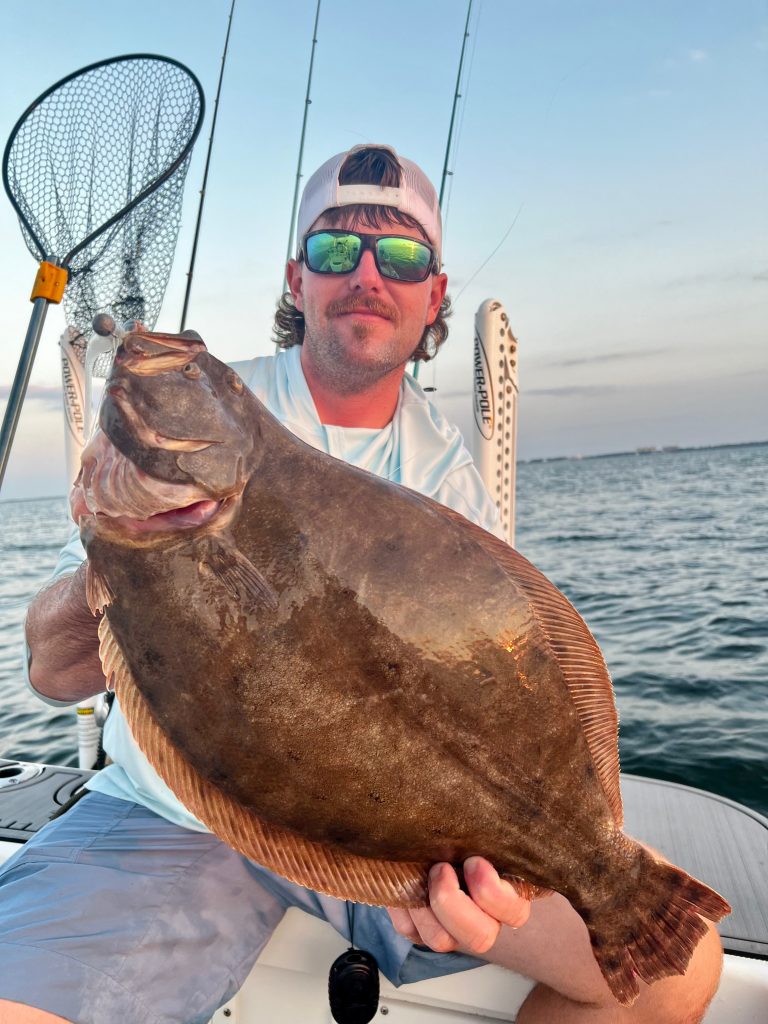
To do this effectively, boat control is critical. That is where shallow water anchors come in. These are hydraulic poles that deploy off the back of the boat to silently pin you in place in shallow water, usually up to 10 feet. Unlike traditional anchors or trolling motor spot lock systems, shallow water anchors hold you steady without disturbing the surrounding water.
“I have Power-Poles on my boat, which is a beautiful piece of machinery,” Collier explains. “It’s one of those things that I didn’t know I needed until I had it.” These anchors allow him to stop on a dime, reposition quickly, and fish an area thoroughly without constantly battling the wind or current. “If you have any kind of wind that plays into the day, you can put those poles down and just stop right in your tracks.”
Not only do shallow water anchors reduce the need to reposition manually, they also prevent potential fish-spooking noise and mud disturbance caused by a trolling motor trying to hold position. As Collier puts it, “If you hit spot lock and you’re in some shallow water, two and a half, three foot, your top’s just swirling around, just stirring up mud… that will definitely spook fish.”
His typical dock strategy looks something like this: approach slowly with the trolling motor and line up a parallel cast along the dock. Drop the shallow water anchors once in position. Fish each piling, casting with purpose and precision. If bites aren’t coming, pull up the anchors, move 10 to 15 feet, and repeat.
It’s a slower process than running a shoreline, but one that pays off when dock structure is holding fish. In tournament settings or high-pressure scenarios, the efficiency and silence of shallow water anchors can give anglers a real edge.
Not every angler is running a bay boat with room and budget for dual Power-Poles, though. For smaller skiffs, jon boats, kayaks, or for folks just looking for a simpler and less expensive way to quietly pin down in shallow water, there are some solid alternatives.
The old-school Cajun “stick pin” or stake-out pole is as simple as it gets—jam it in the bottom and tie off—but it’s not always the most convenient option when you’re moving spot to spot. Products like the StayPut Anchor bridge that gap, giving you much of the holding power and convenience of a powered system without the cost or complexity. The StayPut uses a resin-injected fiberglass pole paired with a sturdy mount—available for the bow, stern, or even the outboard motor—that you can quickly deploy by hand to lock the boat in place. It’s quiet, quick to use, and easy to install, making it a favorite for anglers who fish skinny water but don’t want to stir up mud or spook fish with a trolling motor.
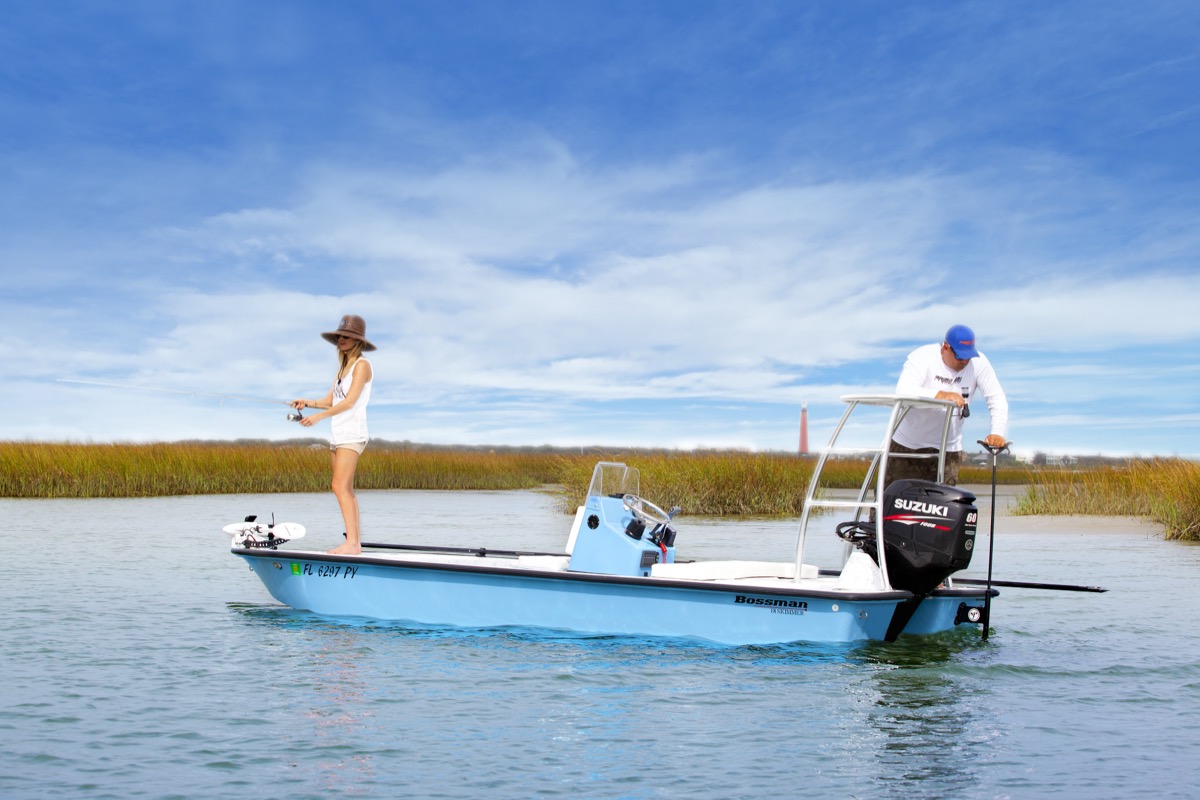
Ultimately, whether you go high-tech with hydraulics or keep it manual, having a reliable way to stay put in the right spot can make all the difference when you’re picking apart structure.
Rocks and Jetties: Parallel and Perpendicular Approaches
Flounder fishing near jetties is similar to fishing marsh edges. Work baits parallel along the structure where rock meets bottom. However, Collier adds a twist: fish perpendicular too. This lets you hit hidden pockets between rocks that might be missed otherwise. Move slowly, repositioning every 15 to 20 feet to thoroughly cover each zone.
Some rocks, he jokes, are “biting rocks”—the kind that steal your jig heads. Use weedless jig heads like the Texas Eye Strike when fishing particularly snaggy terrain.
Tides and Timing: When Flounder Feed
While you can catch flounder at any tide, Collier is adamant: “Falling tide is always my favorite.” As water levels drop, bait gets flushed out of the marsh and drains, putting flounder in prime feeding mode. Current is key. No water movement often means no bite.
Gear and Bait: Keep It Simple and Durable
Collier’s go-to setup for shallow water includes a 7-foot, medium power fast or extra-fast action rod, paired with a 2500 to 3000 size spinning reel, and spooled with 20 to 30 lb braid and a 30 lb fluorocarbon leader.
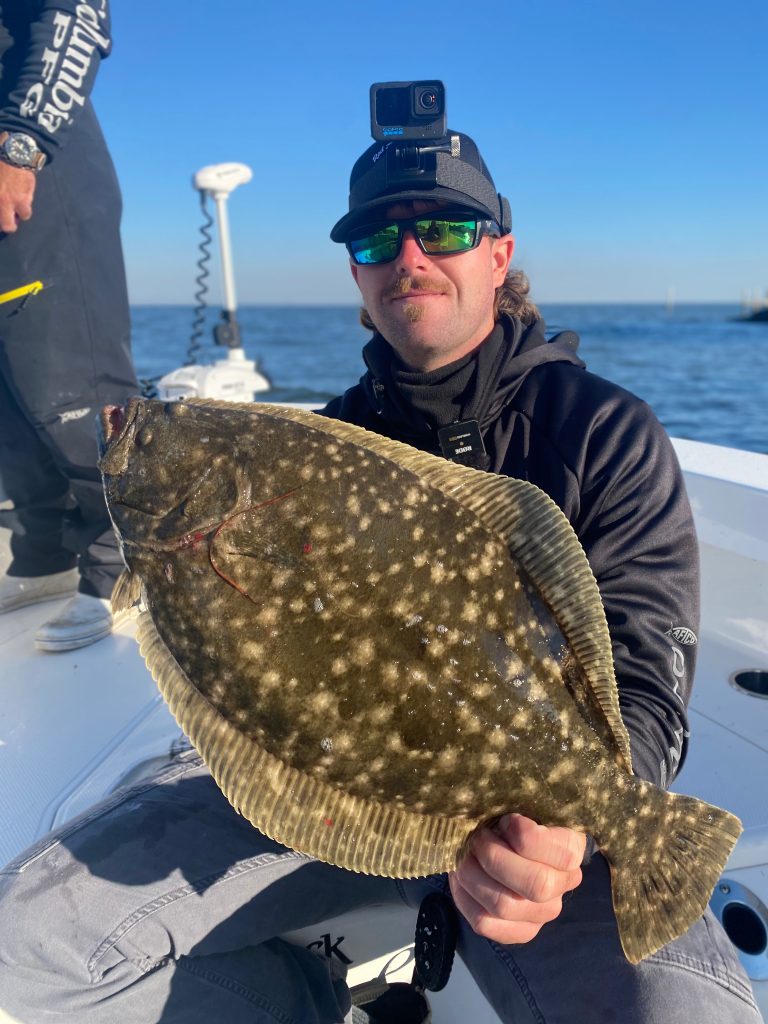
He favors Z-Man plastics for their durability, especially the DieZel MinnowZ, Jerk Shadz, and the newer Big BallerZ. These are paired with ¼ oz jig heads like Death Grip or Texas Eye Strike, depending on the structure. For deeper water, he switches to shorter, heavier rods and heavier jig heads for better control and less tip wrap.
Technique: Be Patient and Intentional
A common mistake when flounder fishing is setting the hook too fast. Flounder often grab the tail first and need a few seconds to fully commit. Collier advises giving the fish four to five seconds before setting the hook, unless you’re fishing near heavy cover where hesitation might cost you the fish.
Snags are inevitable, but there’s a right way to get free. Collier suggests using the “bow and arrow” method: gently bow the rod and release tension quickly to pop the hook free without burying it deeper.
Final Advice: Adapt, Adjust, and Learn
Whether you’re new to flounder fishing or looking to refine your technique, Captain Collier’s approach is all about adapting to conditions and understanding your environment. Structure, tide, and bait presence all play a role. “If there’s not any life—no mullet, no movement—I’m not going to fish that spot for long,” he explains.
He also emphasizes the importance of watching, learning, and trying new things. That mindset, combined with a relentless attention to detail, is what sets productive anglers apart.