

Planning an offshore fishing trip isn’t just about grabbing your rods and heading for open water. It’s a game of strategy, preparation, and respect for the ocean—something Captain Harris Scruggs knows well. With years of experience running charters and competing in tournaments from the Florida Panhandle, Scruggs has learned the hard way what separates a successful trip from a miserable one. Here’s his no-nonsense guide to planning an offshore fishing adventure that’s safe, productive, and worth every drop of fuel.
1. Preparation Starts Well Before You Leave the Dock
The difference between a successful trip and a frustrating one often comes down to preparation. Scruggs emphasized the importance of rigging enough bait, especially when chasing species like tuna or mahi. “If you think you’ve got enough bait,” he said, “pack more.” He recalled a trip to Blind Faith, 170 miles offshore, where the crew had just enough live bait to keep fish engaged during a hot bite. Without it, they’d have gone home empty-handed.
Similarly, underestimating supplies, particularly essentials like water, can derail your day. Scruggs once found himself 80 miles offshore with nine people and almost no drinking water after a careless pre-trip evening. “We were down to drinking cooler ice on the last day,” he admitted.
Takeaway: Always overpack the essentials, ice, and water especially. Scruggs recommends a case of water for every two people on a full-day trip.
2. Know Your Boat’s Limits and Fuel Strategy
Fuel management offshore is about more than knowing your tank size. The load weight from ice, gear, and passengers can significantly affect fuel economy. A heavily loaded boat may burn 25% more fuel than expected. Scruggs advises sticking to the “thirds rule”: use a third of your fuel going out, a third coming back, and reserve the final third for emergencies or scouting new spots.
Pro tip: Boats without advanced fuel monitoring systems should be especially cautious. Overconfidence in mileage can lead to dangerous miscalculations.
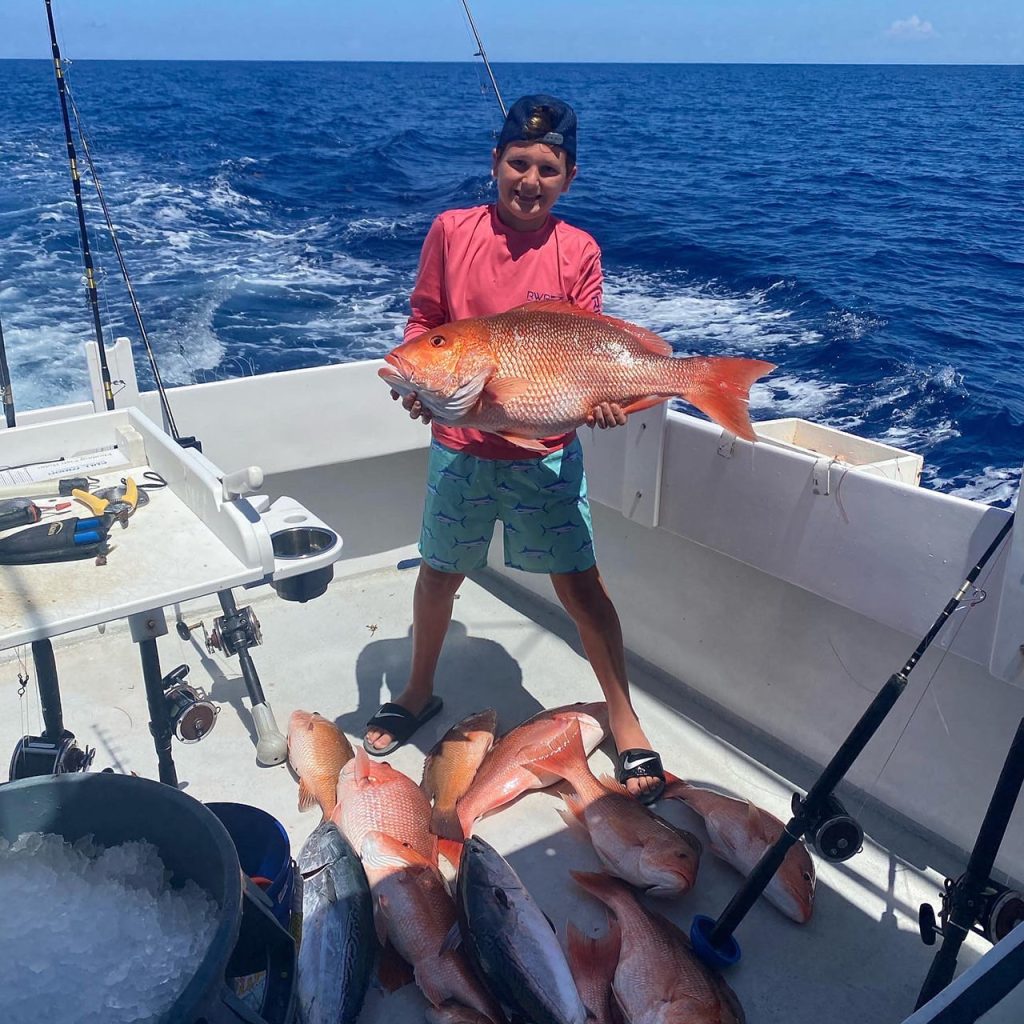
3. Monitor Weather and Sea Conditions Religiously
Forecasting is a critical part of trip planning. Scruggs uses NOAA’s segmented Gulf forecasts for wave conditions, but when it comes to wind, he swears by the Windfinder app. It allows him to adjust course and avoid putting the boat in uncomfortable head seas. “A quartering sea off the bow is always better than riding straight into it,” he said. This makes for a smoother ride out and a safer, easier ride home.
4. Don’t Skimp on Safety Gear
Scruggs is a firm believer in having the right safety equipment, whether or not the law requires it. He considers a life raft non-negotiable, even on day trips. “If something happens and you’re floating out there with your kids, that $2,000 raft suddenly looks like a bargain,” he said.
In addition to a life raft, he recommends:
- An EPIRB (Emergency Position Indicating Radio Beacon) with hydrostatic release.
- A Garmin inReach or other satellite communicator.
- A well-stocked first aid kit (Scruggs brings custom supplies, not just a pre-packaged kit)
- AED (defibrillator) for cardiac emergencies—especially important for charter trips with older clients.
And while it’s not gear you stow onboard, one more layer of peace of mind is an on-water assistance and boat towing membership, like Sea Tow. When you’re fishing far offshore, having a plan for breakdowns or mishaps is critical, and it doesn’t always involve the Coast Guard. Memberships like Sea Tow provide tows, fuel delivery, or jump starts, helping bridge the gap between inconvenience and stranded, especially when you’re a long run from port.
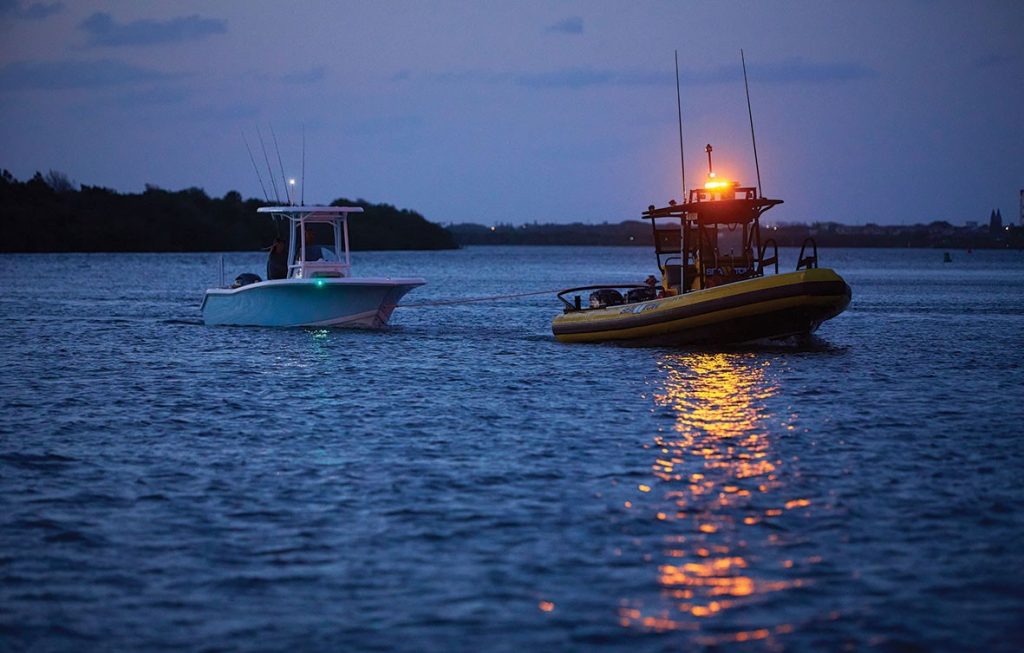
For offshore anglers, it’s important to dig deeper into the fine print between Sea Tow and BoatUS. BoatUS claims “unlimited towing” on their website, but their definition of that is, ”An Unlimited Service Area is up to a minimum of 25 miles from the responding TowBoatUS Port. Many TowBoatUS Companies offer larger Unlimited Service Areas to meet the need of their boating community.” It’s easy to miss this distinction. Sea Tow, by contrast, includes truly unlimited towing in its standard Gold Card membership.
5. Communicate Your Plan
Before heading out, Scruggs always notifies at least one trusted person of his location, general plan, and return window. He suggests sharing both with a loved one and another experienced mariner who understands the region.
Suggested method: A simple text message or handwritten note detailing your route, fishing target, and return time can make the difference in an emergency.
6. Gear, Tools, and Tackle: Stay Organized
Whether it’s extra impellers, hose clamps, coolant, or tackle supplies, Scruggs keeps his boat meticulously stocked and organized. He and his mate review and restock daily. “If something breaks or runs out, we’re not shutting down the trip,” he said. His onboard inventory includes spares for nearly every critical component—from oil and coolant to starters and alternators.
Tackle organization is just as important as mechanical prep. Offshore trips usually demand a mix of rigs, lures, and terminal tackle, and digging through a messy gear bag can waste valuable time. Tackle storage systems like the Plano Stowaway with Rustrictor and Label Lock technology make it easier to keep everything in its place. The built-in rust inhibitor protects your hooks and hardware from salt corrosion, while the customizable compartments and labeling features help anglers stay dialed in—even in rough conditions.
Bonus: A clean, clutter-free boat isn’t just more efficient—it’s safer. Scruggs is “OCD” about cleanliness, and it shows.
7. Log Every Trip
Keeping records—digitally—is a habit Scruggs swears by. “I wish I’d started this earlier,” he said. He logs everything from catch data to conditions and GPS coordinates. These logs help him avoid repetitive mistakes and target the most productive waters.
8. Dress the Part and Stay Comfortable
On longer trips, small discomforts add up fast. Scruggs prefers hooded shirts for sun protection, straw hats for ventilation, and durable footwear like Xtratuf boots or waterproof sneakers. Wet feet or sunburn can turn an already tough day into a miserable one.
But clothing is only part of the equation. Offshore, the little creature comforts take on an outsized importance. A cooler packed with cold drinks, a stash of favorite snacks, sunscreen that actually works, and a good pair of polarized sunglasses all help keep energy and spirits high. Some anglers even find that keeping familiar rituals close at hand makes the day smoother. A warm cup of coffee miles offshore can really raise your spirits, and many find that a little nicotine helps take the edge off a long day offshore. For those who enjoy smokeless tobacco, newer alternatives like Black Buffalo provide the same ritual without the tobacco leaf or stem, making it the perfect option for long days on the water.

At the end of the day, comfort is about making sure you’re focused on fishing, not fighting off the small miseries that can distract from the experience.
9. Respect the Ocean—and Your Own Limits
Above all, Scruggs advocates humility on the water. “Mother Nature doesn’t care how experienced you are,” he said. That respect—and a willingness to admit when things go wrong—is what keeps veteran captains afloat season after season.
Final Thoughts
Offshore fishing isn’t just about catching big fish. It’s about planning for the unexpected, prioritizing safety, and building experiences that are memorable for the right reasons. Taking seamanship seriously is part of what makes offshore fishing rewarding when things go right. Take a page from Captain Harris Scruggs’ playbook: Overprepare. Stay humble. And never underestimate the power of open water.