
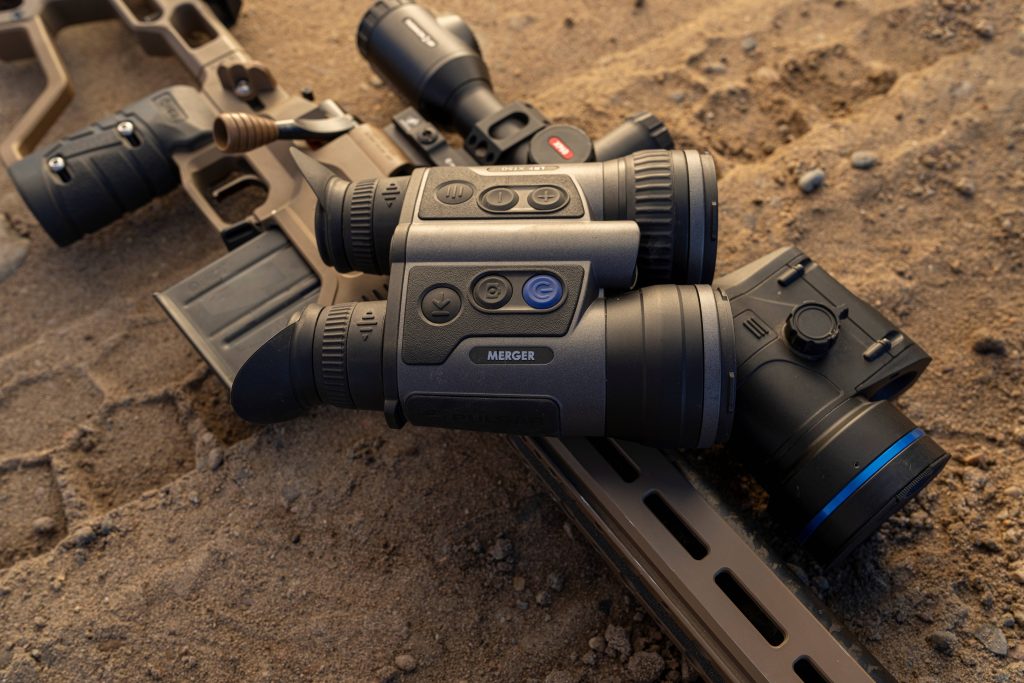
If you have ever tried to research a thermal scope online, you already know how confusing this world can be. It feels like a foreign language. Numbers everywhere. Terms like sensor resolution, objective lens size, base magnification, NETD, and ballistic calculators. The goal today is simple. This is a full thermal hunting scope guide where we give you thermal scopes explained in a way that actually makes sense. No fluff, no tech talk you cannot use. Just real information that helps you decide what to look for in a thermal scope for hunting.
To break it all down, we talked with Chris French from Pulsar, who not only works in the thermal optics industry but grew up hog hunting with everything from spotlights to early-generation night vision. His explanations of how thermal scopes work and which features actually matter are the clearest you will ever hear.
Below is everything a hunter needs to know before buying a thermal scope.
How Thermal Scopes Work (In Terms Hunters Actually Understand)
Before we get into picking the right scope, you need a basic understanding of how thermal scopes work. Thermal is not the same as night vision. Night vision amplifies visible light. If there is no light, it sees nothing. Thermal sees heat signatures, day or night.
Chris explained it in the simplest way possible. “Your thermal is going to display the differences in heat from whatever you are looking at. If everything is the exact same temperature, you will not see anything. But if there are differences in heat, you will pick them up.”
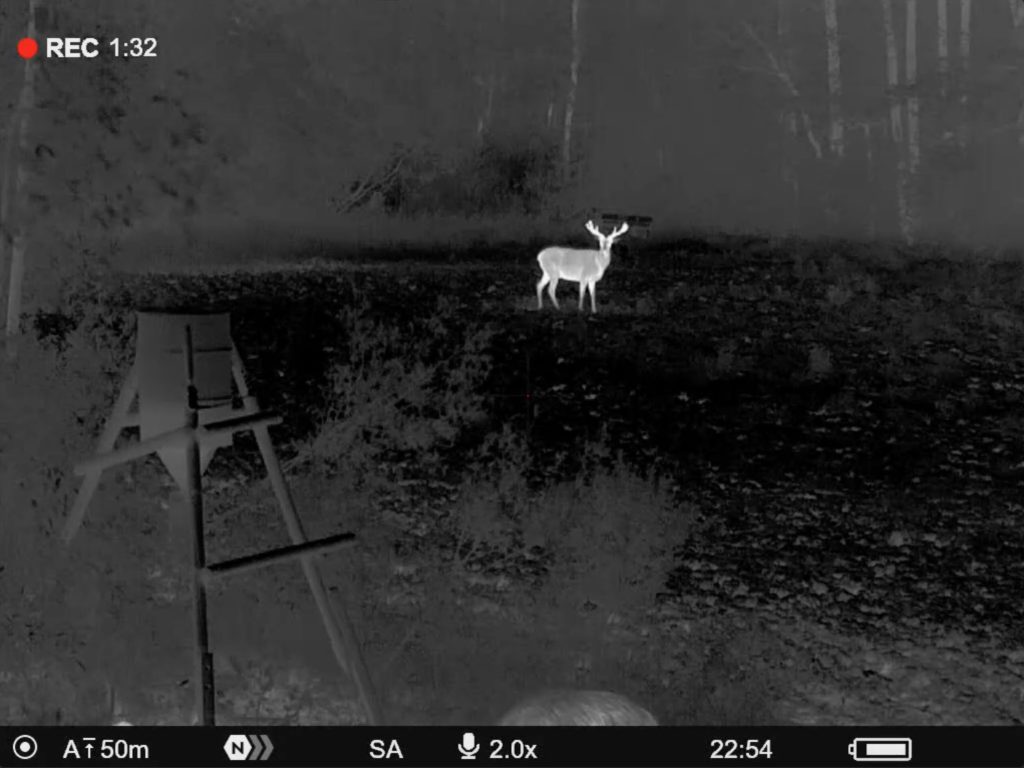
That is why thermal is so valuable in timber country, around food plots and along the edges of cutovers where hogs and coyotes blend in. Chris told us, “Besides standing behind something, it is nearly impossible to hide from thermal.”
This is the first thing most hunters realize when they start using one. Thermal makes the woods feel alive at night.
The Four Key Specs That Actually Matter for Hunters
When hunters talk about what to look for in a thermal scope for hunting, these four specs matter far more than anything else.
1. Sensor Resolution (384 vs 640 vs 1024 vs 1280)
Sensor size is the foundation of image clarity. It determines how much detail you can see and how far you can zoom.
Chris broke it down like this. “A 640 is not exactly twice the size of a 384, but it is close. A 1024 and 1280 are almost three times the size of a 384.”
Why does that matter? Because when you zoom, you are not magnifying glass optics. You are literally enlarging pixels. He said, “If you zoom a 384, you cut the pixels down fast. On a 1024, even when you zoom, you still have more pixels than a 384 had to begin with.”
If you plan to take long shots or want to positively identify coyotes at distance, sensor resolution should be your top priority.
2. Base Magnification
This is one of the most misunderstood parts of choosing a thermal. In traditional rifle scopes, most hunters start with 3 to 12 or 4 to 16. Thermal is different.
Chris explained why. “If you are in timber at 100 yards, you are not going to want a really high base magnification, because you will get lost in the trees. But if you are in a thousand acre wheat field, that 4X base mag is perfect.”
In other words:
- Timber and thick cover: Low base magnification
- Open ag fields: Higher base magnification
Your hunting environment determines what is best.
3. NETD (Noise Equivalent Temperature Differential)
This sounds complicated, but Chris simplified it. “It is the sensitivity of the sensor to tell the difference between heat signatures. If you have a lower NETD value, you generally are going to have a more sensitive thermal and potentially a better image.”
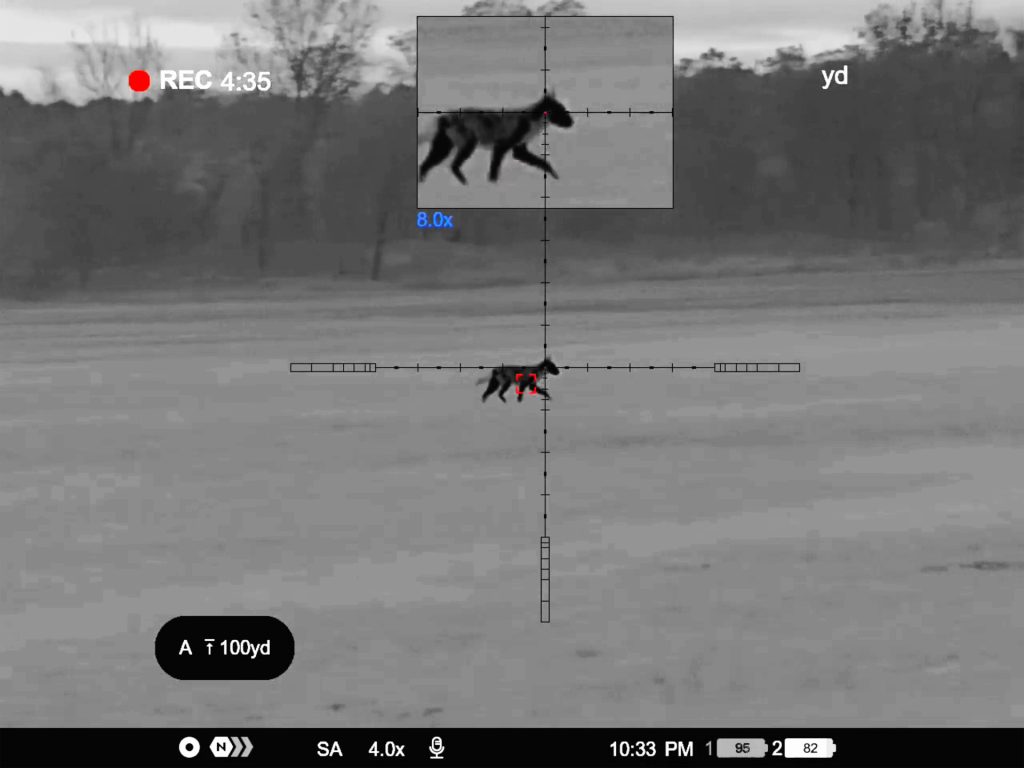
This is the feature that allows you to pick animals out of thick grass, identify coyotes hiding in brush piles and track movement on warm nights.
4. Objective Lens Size
Objective lens size affects field of view and base magnification. Bigger lenses give more magnification but less field of view.
Chris put it plainly. “There is a trifecta between objective lens, magnification and field of view. As lens size goes up and magnification goes up, your field of view goes down.”
Hunters in the Southeast want wide field of view. Hunters in Texas or Kansas want reach.
Which Hunters Should Choose Which Scopes?
This is where Chris provided some of the most helpful advice in the entire conversation.
Occasional Hunter (A Few Times Per Year)
If you only hunt hogs or predators a handful of times per season:
- A 384 scope is plenty
- You save money
- You still get strong performance under 200 yards
Chris told us, “The closer you get, the more you hit.”
Weekly Hunter
If you are hunting once or twice a week, Chris recommends a 640.
“If you are going to look through the scope every single week, save a little more and get into a 640. The experience is better. It is easier on the eyes.”
Coyote Guys and Long-Range Shooters
If you shoot long, Chris does not sugarcoat it.
“For coyotes and long range, I push people to a 640 at minimum. And if you hunt that often, I might even push you toward a 1024 or 1280.”
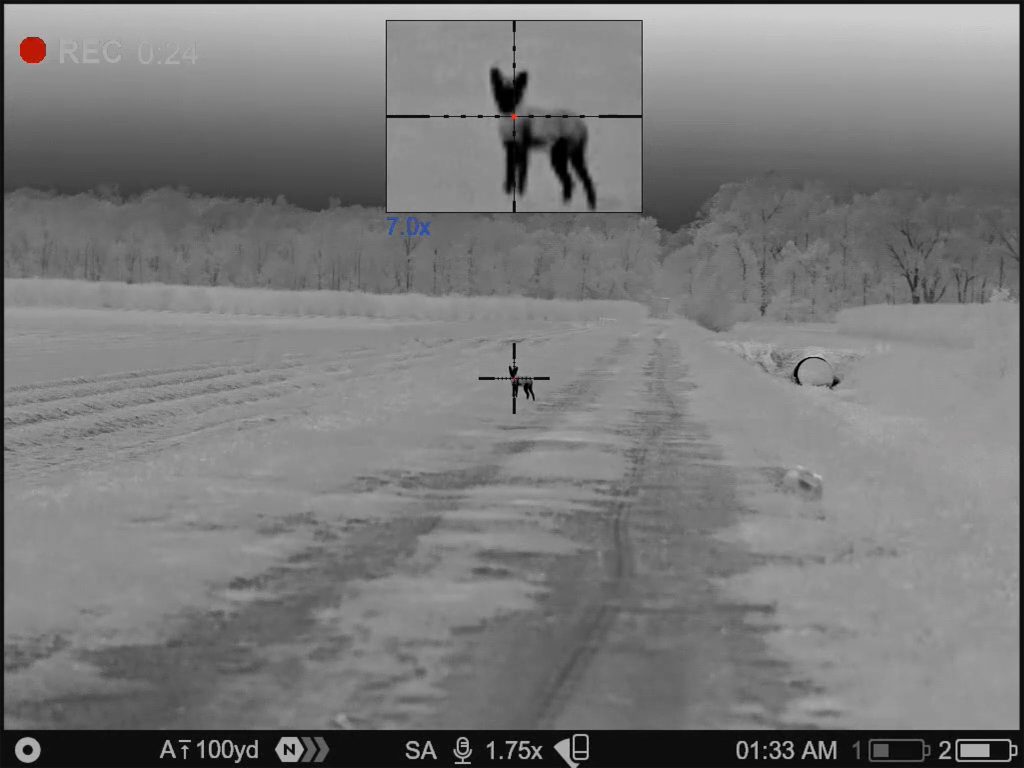
This is where thermal scopes with high resolution really shine.
Must-Have Features That Matter More Than People Realize
Beyond sensor size and magnification, these are the features Chris considers essential.
Recording Ability
For Chris, this is non-negotiable. “There is just something about being able to go back and re-watch a pig flip end over end. If you are not pressing record, nobody is going to believe that shot.”
Multiple Color Palettes
Chris explained why palettes matter. “Different palettes can display the hot objects you are looking at slightly differently. Sometimes you can identify something in one palette that you cannot see in another.”
Rechargeable Batteries
Skip anything with CR123s. Pulsar’s swappable rechargeable batteries last longer and cost far less over time.
App Integration
Pulsar’s Stream Vision app allows live viewing and recording, plus kid-friendly supervision in a blind.
Chris said, “It is not a must-have, but it is a very nice creature comfort.”
Laser Rangefinder + Ballistic Calculator
This may be the most important premium feature for hunters.
“When you laser a target and it gives you your holdover, that is a game changer.”
It allows accurate shots at night, especially with subsonics or AR calibers at distance.
Zeroing a Thermal Scope the Right Way
Most complaints about thermal scopes come from hunters zeroing the wrong way. Chris sees it constantly.
He told us, “You freeze on your point of aim and move to your point of impact. You do not freeze on your point of impact and move to your point of aim. If you do that, you will chase shots off the paper.”
That single correction solves 90 percent of zeroing frustrations.
Should You Buy a Used Thermal?
Thermal optics hold value. That makes the used market strong.
Pulsar now offers a five year warranty. Chris explained, “Pulsar has been around since 1991. We have units from six or seven years ago still coming in for service and going right back out.”
Then he warned hunters about bargain-bin brands. “Some companies offer warranties longer than they have been around. Be careful.”
If you stick to reputable brands, thermal scopes are a low-risk investment.
Avoid the Cheap Stuff
Chris was crystal clear. “If you are thinking about buying a sub-$1,000 thermal, I would rather you buy a digital night vision unit. A cheap thermal is almost unusable.”
If your budget is limited, start with quality night vision and save for a real thermal scope later. It will save you money in the long run.
Final Thoughts
Thermal optics are not cheap, but once you experience them, you understand the hype immediately. Whether you want to protect your land from hogs, control predators, or enjoy the excitement of nighttime hunting, a thermal scope becomes one of the most valuable tools you own.
Chris summed it up perfectly. “Once you start thermal hunting, you are not going to not like it.”
That is the truth. And with the information above, you now know exactly what to look for in a thermal scope for hunting and how to choose the right one for the land you hunt.