

The state of Mississippi, the 32nd largest state in the U.S. and the 35th most populous, has an amazing history of being settled by Paleo Indians in 9500 B.C., next being represented by the Mound Builders and then explored by the Spanish in the 16th century and the French colonists in the 17th century. Today much of Mississippi is considered rural – 65 counties out of 82 counties. Those rural lands are about 52% woodlands, 26% pasture lands and 14% croplands, which means that outdoor things to do in Mississippi is a primary pursuit. Visit Mississippi can help you find the best outdoor spots for hunting and fishing.
This vastness of rural lands in Mississippi translates into numerous places to camp including camping areas associated with the: Mississippi Department of Wildlife Fisheries and State Parks; the Pat Harrison Waterway District State Parks; the U.S. Army Corps of Engineers Campgrounds; the Tennessee/Tombigbee Waterway Campgrounds; the Pearl River Valley Water Supply District Campgrounds; the Mississippi Good Sam Campgrounds; and the Mississippi National Forests Campgrounds.
Of the 7,000 rivers in the state, the Mississippi River is the 13th largest river in the world in its entire length. Mississippi rivers offer fishing, canoeing, swimming, camping, hiking and hunting around them with the largest rivers in the state including the Pearl River; the Pascagoula River; the Tombigbee River; the Chunky River that includes the state’s tallest waterfall; the Strong River; the Big Black River; the Yazoo River; the Chickasawhay River; and the Leaf River.
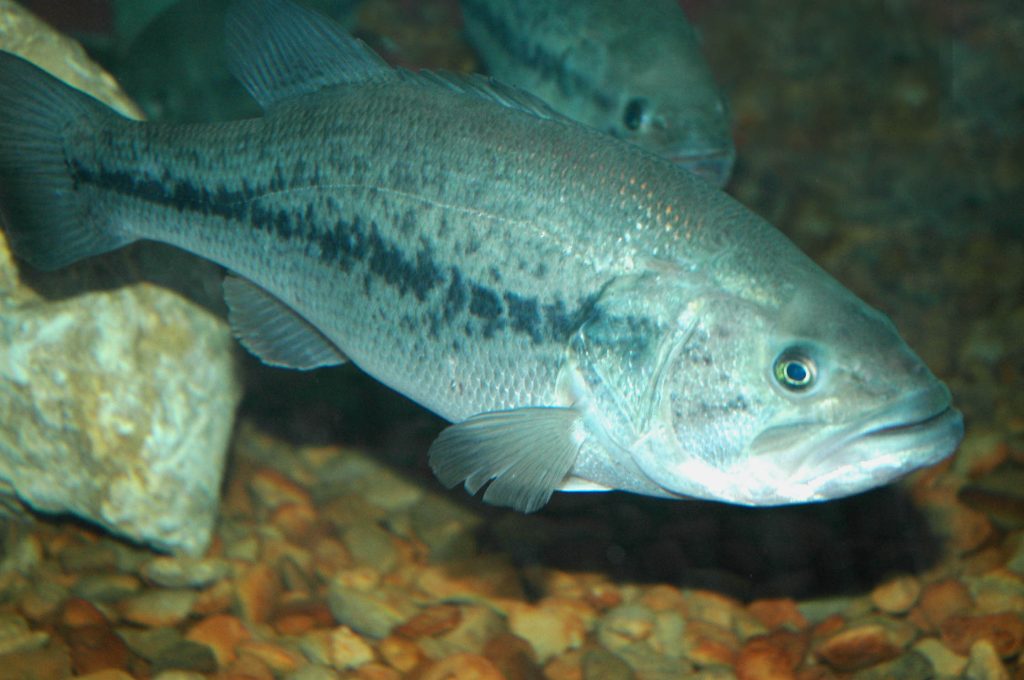
Freshwater Fishing
Many Mississippi lakes offer outstanding fishing from kayaks, canoes, boats and the banks. At the Mississippi State Fishing Lakes, fishing is free, and no sport fishing license or lake permit is required. However, only rod and reel or pole fishing are allowed at these lakes.
Numerous places are available for the Mississippi visitor to stay to catch a wide variety of the 280 freshwater fish species in the state’s rivers, lakes, ponds on people’s farms and streams. Kelley Durrett, the director of the Ridgeland Tourism area of Mississippi, near Jackson in the central part of the state, says that Ridgeland has, “16 hotels within a 15-minute drive of Ross Barnett Reservoir. Local guides on the Ross Barnett Reservoir in Ridgeland can give you all the information you’ll need to have a successful fishing trip. Brad Chappell of Brad Chappell Guide Service is very knowledgeable about fishing at Barnett, Lake Washington and Eagle Lake and particularly enjoys fishing for crappie. The Pearl River Valley Supply Water District manages 33,000-acre Barnett Reservoir where anyone can fish as long as he has a fishing license.”
“Largemouth and spotted bass are abundant in Barnett Reservoir. Largemouth bass can be found in all areas, but look for the majority of spotted bass action north of Highway 43 to Low Head Dam. With the summer heat, bass will begin to move into cover or deeper, cooler waters. A variety of lures can produce excellent catches around vegetation, including plastic frogs, soft plastics and jigs, the latter of which are punched through the matted vegetation. Fishing the ‘pads’ in areas above Highway 43 and also near Gilligan’s Island can be great for topwater action as bass tend to find cover underneath the large American Lotus plants. Rubber frogs are deadly then. Fish crankbaits in the stump fields or try the slower action of a Carolina-rigged worm on drop-off points and channel ledges with structure. Watch for surface schooling activity in those areas.”
Popular baits for catching bream in Barnett Reservoir are red worms and crickets. Good-sized bluegills and redears can be caught in many locations, including the vegetation mats along Cane Creek and the backwater sloughs near the Rocks. The fishing piers located off Highway 43 and Highway 471 in Pelahatchie Bay are also popular sites. Fly fishing can be productive along the Natchez Trace in the summer when the mayflies hatch.
Paul Elias, one of the most well-known state anglers, selects Lake Bogue Homa near Laurel as his favorite July lake for bassing. During daylight, he prefers a walking bait like a Zara Spook, a popping bait like a Pop-R and a Mann’s SpringR Worm. He also fishes cypress trees and lily pads in July with a Super Frog and, “Expects to catch perhaps an 8-10 pound bass at Bogue Homa.”
In August, Elias primarily fishes Maynor Creek near Waynesboro with a Zara Spook early, next the lily pads with a green-pumpkin bladed jig and later a Mann’s Super Frog. “Maynor’s bass prefer a slow-swimming frog. I’ll generally catch 10-12 bass, ranging up to 7 pounds.”
For trophy catfish, fish where the Arkansas River flows into the Mississippi that contains massive blue and flathead cats. Belzoni, Miss., is known as the Catfish Capital of the World, and Lake Charlie Capps also is well-known for big cats.
Hunting
Mississippi is home to a large number and variety of animals. Predators like beavers, coyotes, nutrias, foxes and skunks are considered nuisance animals. Coyotes, a highly mobile and growing species of nuisance animals, also can be hunted at night. You can visit the website for the Mississippi Department of Wildlife, Fisheries and Parks (www.mdwfp.com) to learn more.
Kelly Durrett explains that, “There’s an alligator season on Barnett with a special permit from MDFP. Although Ridgeland doesn’t have Airbnbs, rental cabins or campgrounds, its hotels are very nice.” Other sections of Mississippi offer alligator seasons too, as well as hunting for squirrels, rabbits, doves and quail. At this writing, offering black bear hunting is being discussed as a possibility in Mississippi’s acres of bottomland hardwoods and canebrakes. The world-famous Teddy Roosevelt hunt took place in Sharkey County in 1902 that led to the creation of the teddy bear toy.
Deer
Mississippi is home to 1.75 million white-tailed deer, and in various parts of the state outdoorsmen can hunt annually for 120 days on private lands, at hunting lodges, at hunting camps and on 50 WMAs and lands belonging to national forests, national wildlife refuges and the U.S. Army Corps of Engineers. One of the state’s top non-typical deer was taken by my good friend, Ronnie Strickland, in 1981 in Franklin County that scored 209-6/8 inches.
Stephen Farmer, whose wife, Ashley, is the executive director of the Greenwood Convention and Visitors Bureau, built and operates the Delta Church Camp, where you can hunt and stay any time during deer, duck and turkey seasons in the 6,000-square foot lodge, containing eight bedrooms and six baths. “Our lodge is only two miles away from public hunting, and we have some leased land where we hold guided hunts. There’s both public and private land around us on the Tallahatchie River as well as a skeet range.”
“This area is home to delicious foods of all types prepared and served in Cleveland and Grenada. Our lodge uses world-famous Viking appliances that are manufactured in Greenwood, and you can have your meal prepared by our award-winning chef. We also can take you to Ground Zero Blues Club in Clarksdale, MS, owned by well-known actor Morgan Freeman, where blues music is played and celebrated and features traditional Mississippi foods. You also can stay at the top-rated boutique Alluvian Hotel in Greenwood that serves Mississippi seafood as well as Italian dishes on white tablecloths in a huge open-air courtyard.”
Turkeys
Mississippi’s 1/4-million turkeys live throughout the state, and you can learn about hunting them at the website for the Mississippi Department of Wildlife, Fisheries and Parks to learn what’s required and places for hunting. Some of the United States’ most famous call companies originated in Mississippi, including Primos Calls and Preston Pittman Calls.
One time when I hunted with Pittman, the winner of numerous turkey-call contests, who also looks, walks and talks like a turkey, I’d downed a fine gobbler and was going to pick him up. Pittman motioned for me to sit down and be still and quiet. He whispered, “Turkeys often can’t tell the difference between a shotgun blast and thunder. Let’s try to take another bird from this spot.” Pittman began calling very aggressively and cackling before a turkey finally gobbled back to him.
We were hunting in a burnt pine plantation with no cover to hide Pittman’s movements. But since we were on private land, we didn’t have to worry about Pittman’s moving on the bird. After about 45 minutes, Pittman’s shotgun blasted, and I ran to where he was. He said, “All I did was get the turkeys to accept me. When I reached where the turkeys were, I got down on my hands and knees and crawled slowly to them. I’d learned that as long as I moved slowly and didn’t seem to pose a threat to the turkeys, they often would accept me. Crawling on turkeys looking at you might seem like a pushy tactic that would spook the birds. But sometimes you get lucky – like I did today.”
Wild Hogs
Like many other states, Mississippi has become overrun with wild hogs that reproduce quickly. As one scientist told me, “If you have land with wild hogs or land on the verge of having wild swine, you soon will have wild pigs on that land.” Mississippi has no daily or seasonal bag limits on wild pigs and is in the top five states in the U.S. in numbers of wild pigs that destroy ground-nesting birds’ nests, eat their eggs, outcompete deer for natural foods, root-up green fields, kill newborn fawns and destroy ecosystems.
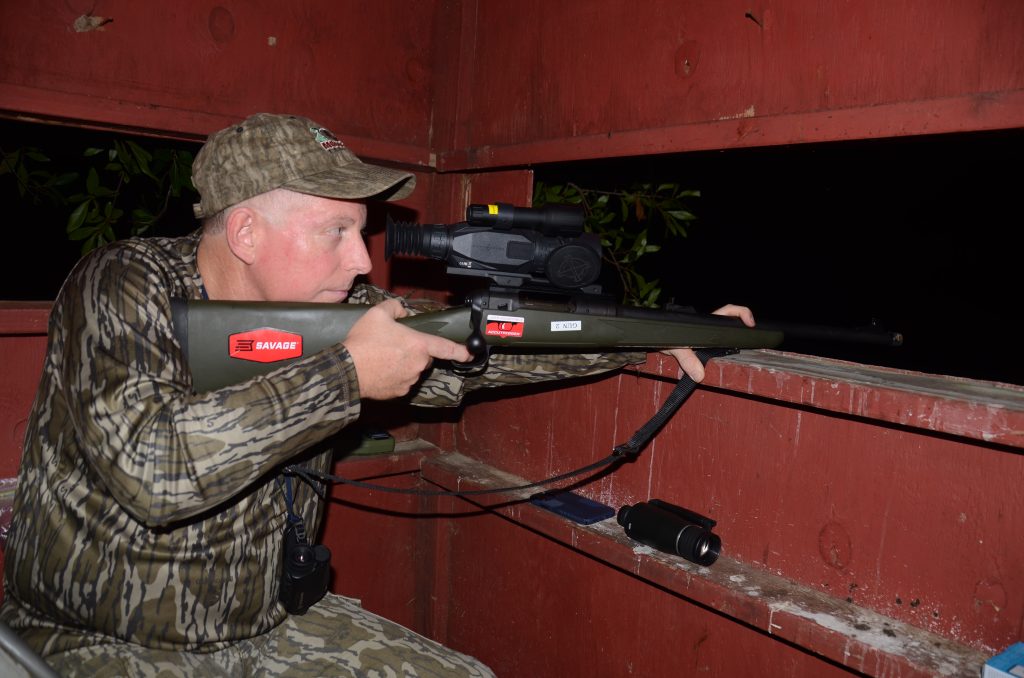
One of my favorite wild hog Mississippi hunts was with Mark McKenna of the McKenna Ranch in Pachuta, Miss., at nighttime using night vision riflescopes and thermal monoculars. McKenna told me, “At first we started seeing wild hogs on our property in 1997. Then they became more numerous, and today never leave but remain on our property year-round. They really have impacted our turkey population. “ McKenna baits hogs for night hunting and then decides where to place the hunters, based on the wind. He’s found wild hogs to be intelligent. One of his hunters has observed that, “Deer are smart and operate off of instinct, but hogs operate off their intelligence.” The McKenna Ranch sells hunts for deer, hogs, turkeys, bass fishing and bird hunting.
Ducks
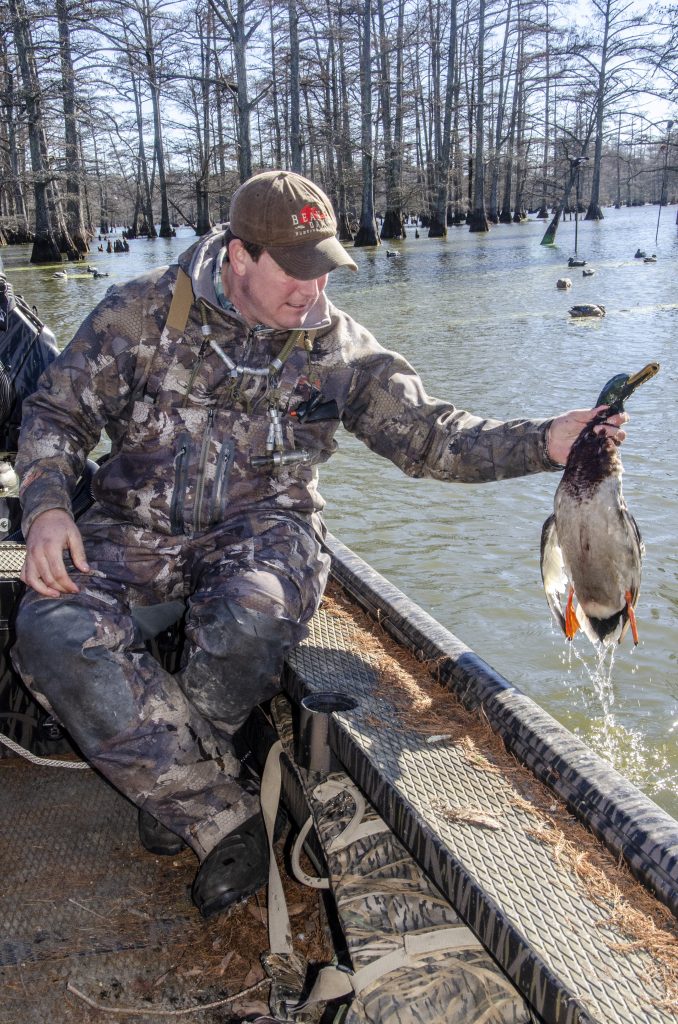
Mississippi is on the Mississippi Flyway, which most years sees a huge number of waterfowl of all types flying the state with its private and public lands available for hunting. Hunters in Mississippi are so fervent about hunting wildlife that I had a nephew who graduated from Mississippi State because he loved duck hunting. Going to State allowed him to live around and hunt in some of the best waterfowl hunting ever, while pursuing his degree.
My favorite waterfowl hunt of all times took place a couple of years ago at Beaver Dam Hunting Service, a 1,500-acre oxbow lake, near Dundee and Tunica, Mississippi. This lake had been popular with waterfowlers as far back as the early 1800s when steamboats ferried hunters from Memphis, Tennessee, to Beaver Dam to hunt ducks, geese and swans. The hunters lived primitive style while there, until the mid-1980s when a train line was completed. Outdoor writer Nash Buckingham was part of the group that built a camphouse there, and his writings about Beaver Dam were legendary.
Mike and Lamar Boyd, who today own a private farm at Beaver Dam, say that 325 bird species have been coming down the flyway to Beaver Dam for hundreds of years. Mike Boyd explains that, “We get to hunt every day during the season, which is unusual for most waterfowl hunting, due to the foods available in this area for the birds.”
The opportunity to take wildlife in Mississippi ranks as one of the highest in the South with plenty of public and private lands. Mississippi’s southern hospitality makes any fishing or hunting trip an exceptional experience. To find the best outdoor spots for hunting and fishing, head over to the Visit Mississippi website.