
When a fish spots a lure, oftentimes it can’t tell whether that lure is an artificial lure or a live baitfish. If it swims like and is colored like a live baitfish and is in a place where a live bait may be, the fish will attack that lure. Some of the advantages of using artificial structure like a fish attractor in a lake or a pond include that you can place a lure in that structure, and it will look natural. That structure doesn’t have to be replenished or replaced but does provide the type of habitat where bass, bream and/or crappie want to live. You also can place that artificial habitat in areas where fish will feed, making locating fish to catch much easier.
Why Develop Artificial Fish Attractors
Great Days Outdoors talked with Cody Borgfeld, the general manager for Texas Hunter Products, a company well-known for its directional fish feeders and deer feeders. “Our company wanted to develop more products for the fishing community that would help anglers locate fish easier and quicker and provide habitat for fish that didn’t have to be replaced like wood structure did.”
“Chris Blood with our company started working with the design and engineering teams at Auburn University in the Industrial Design and Fisheries departments to develop numerous ideas. The most-innovative designs were field tested by top fisheries biologists with leading lake-management companies across America. Then their feedback was incorporated into the final patent-pending designs. Collectively, they developed four, different types of artificial fish attractors in various sizes.”

Artificial fish attractors come with a bunch of cool perks for folks who love fishing in ponds and lakes. First off, they’re like a magnet for sportfish, making them super popular among anglers. But it’s not just about attracting the big fish; these structures also serve as a home for algae, plankton, and other tiny critters that baitfish munch on. This means they help keep the food chain buzzing by protecting, conserving, and boosting the production of these smaller fish. Plus, they’re built to last, using materials that are friendly to the environment and won’t get beaten down by the sun’s rays or fall apart over time like natural hideouts can. You can either anchor them down or hang them up, and they’re designed to create cozy spots of shade that bass and other sportfish can’t resist. The design is also pretty neat because it won’t snag your fishing line, making for a smooth fishing experience. These attractors are made to withstand the test of time, proudly produced in America. And they’re simple to assemble, meaning that you won’t need to pull out your toolbox.
What Types Of Fish Attractors Are Available
Lily Pads
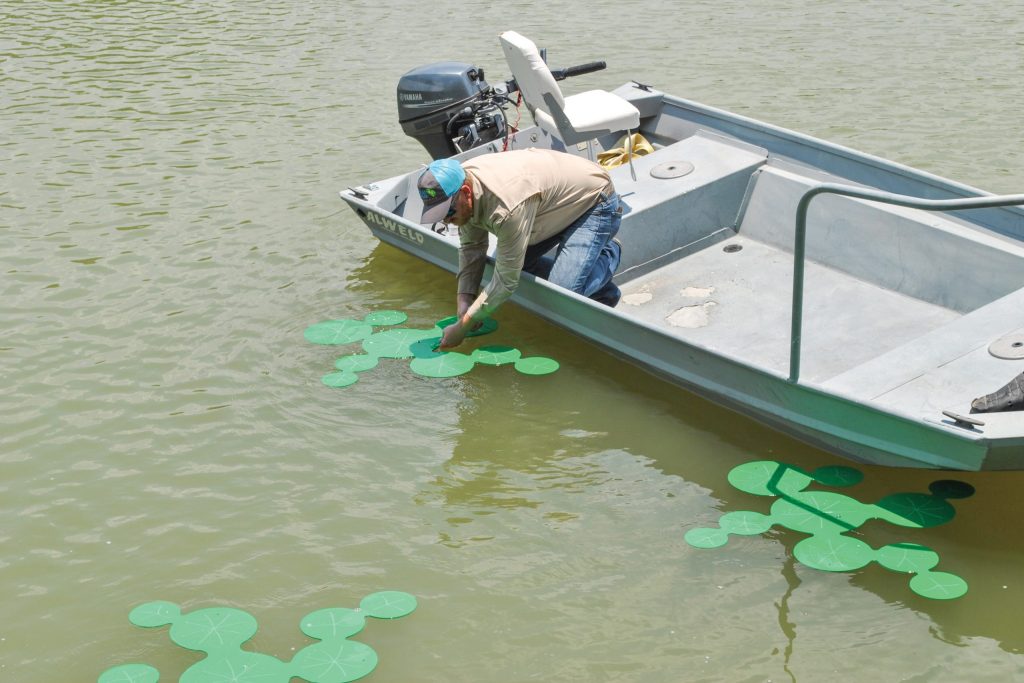
As Borgfeld explains, “Most of our company’s artificial fish attractors are underwater, but we do manufacture lily pads that are designed to mimic real lily pads. With these artificial lily pads, a pond owner doesn’t have to be concerned about controlling pond weeds. The lily pads are the only design for our artificial fish attractors that are above water. They actually float. Bass like to get under lily pads, especially in the hot summer months, to find shade and ambush points. Our lily-pad fish attractors are extremely productive for anglers fishing with topwater lures.”

Fish Pyramids
“The most-popular fish attractor we offer is the fish pyramid, which is a protective habitat that has multiple holes where bluegills and other forage fish can congregate and be protected,” Borgfeld says. “These fish attractors have what we call shade blades that pass through the attractors and collect algae. So, besides protecting the forage fish, this fish attractor provides food in the form of algae for smaller baitfish. These attractors give forage fish a chance to grow and reproduce more forage fish before the bass feed on them.”
“We offer two sizes of fish pyramids: a small fish pyramid and an XL fish pyramid. The pyramids are our midwater fish attractors. You actually can sink this device to the bottom though, or you can suspend it in midwater. Then the pond owner will have a fish attractor at the depth he prefers it to be.”
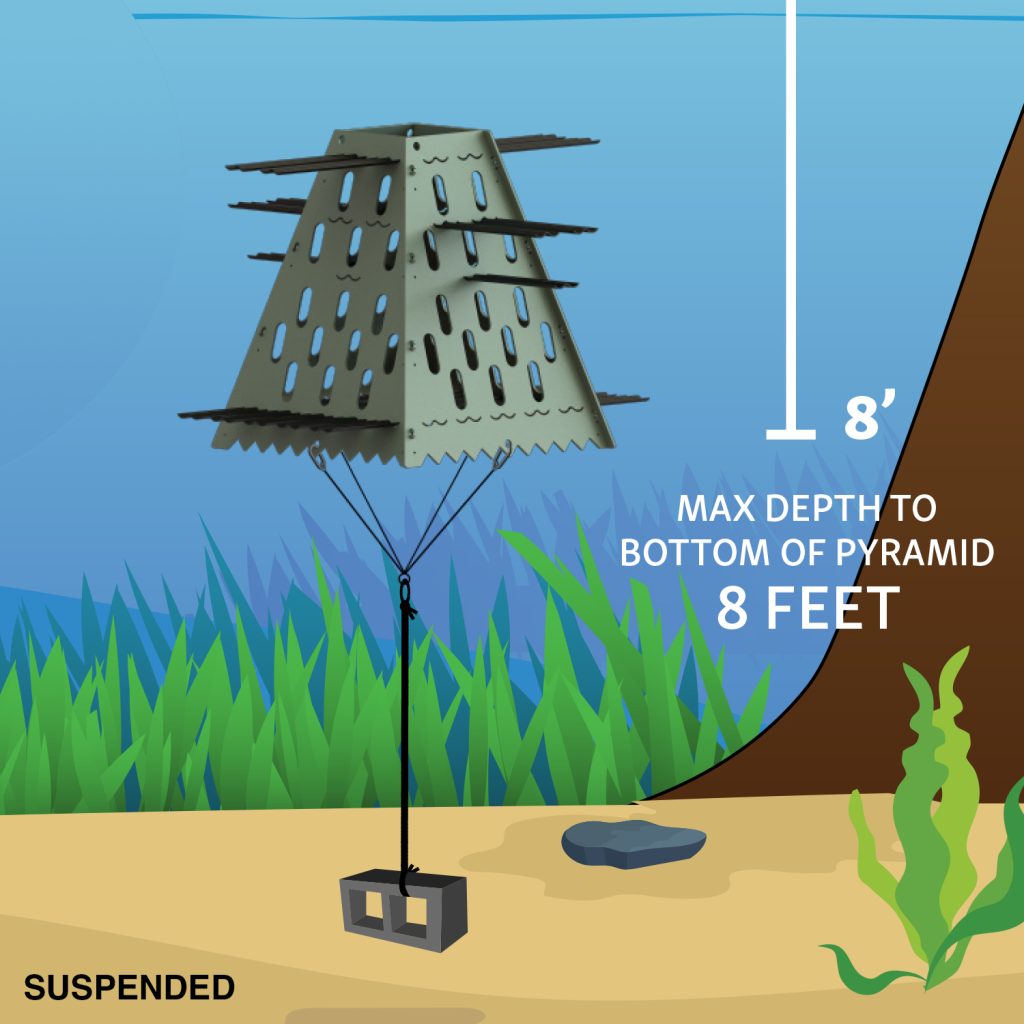
“The advantage of having a fish attractor that you can suspend is that you can suspend that device along the thermocline where the bass often hold. The thermocline is the transition layer between warmer, mixed water at the surface of the pond and the cooler, deep water below. In ponds, you really don’t want your fish attractor any deeper than 8 feet, because in the summertime there’s generally not much oxygen below that depth.”
Spawning and Escape Habitat
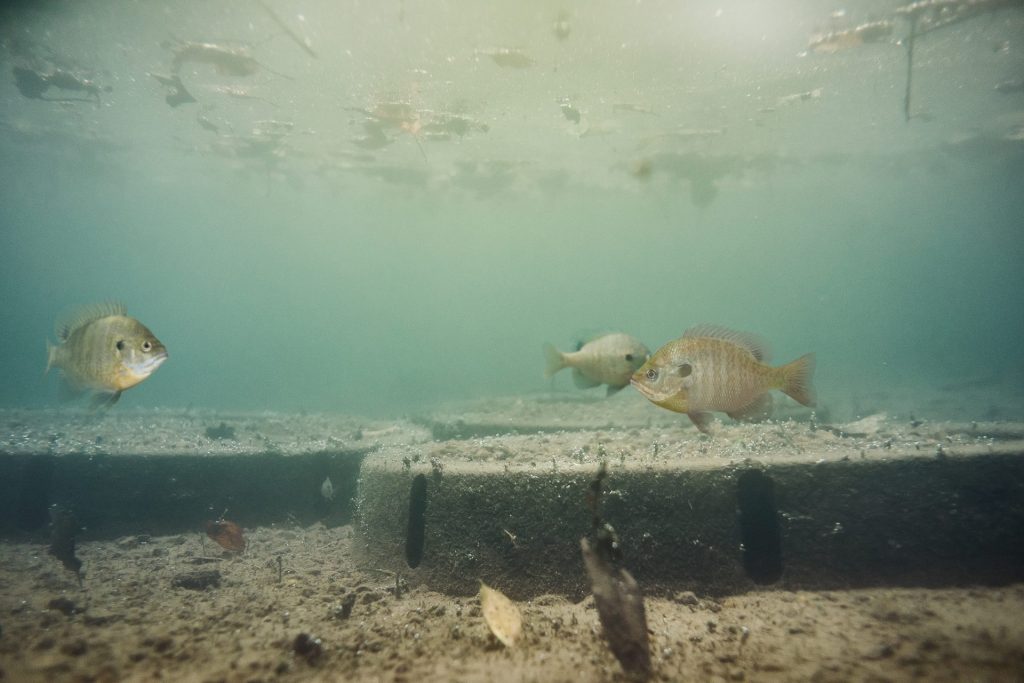
Borgfeld reports that, “Our spawning and escape habitat allows the pond owner to put gravel in it in shallow water. One advantage the spawning habitat has is there are holes underneath the bottom of this device that enables young bass and bream to escape under the habitat, to keep from being eaten. Both bass and bluegills will spawn on this type of fish attractor.”
Fish Grass
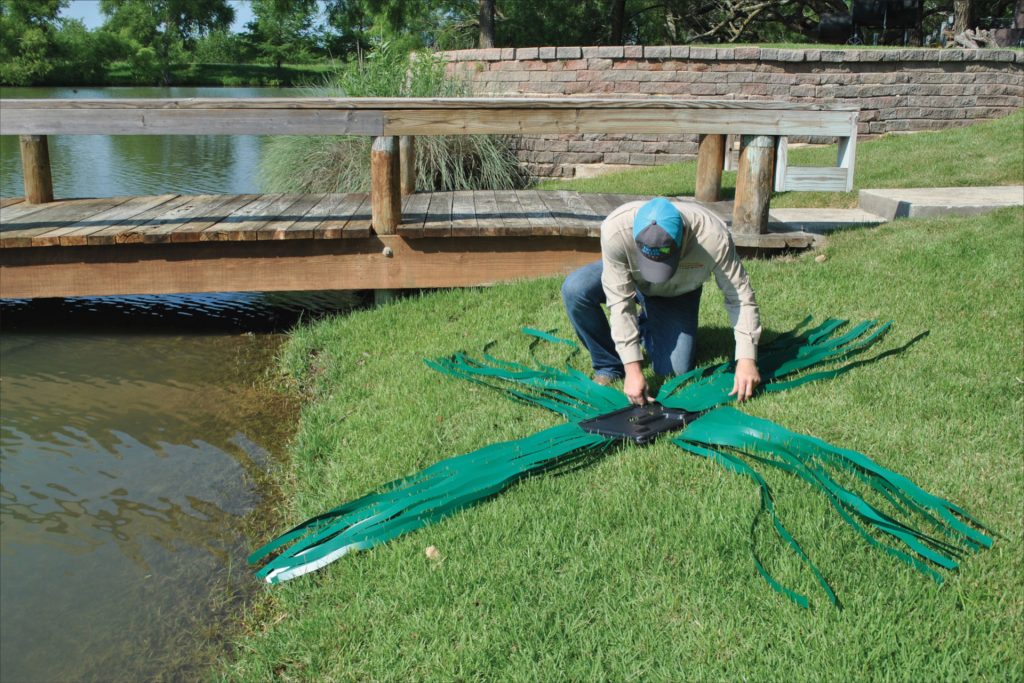
Some of Texas Hunter’s shallow-water fish attractors are composed of artificial fish grass. As Borgfeld emphasizes, “Algae will grow on this artificial fish grass, and fish will attach their eggs to this artificial grass. By using the artificial grass, you don’t have to worry about weeds growing in certain areas of your pond. This grass is a good place for bass and other fish to hide out and ambush prey fish. This type of fish attractor works best, if you put the fish grass where grass normally will grow in a pond. If your pond has fairly-clear water, grass naturally will grow in it.”
Which Artificial Habitat Is Best For Your Lake Or Pond
Borgfeld says he’s often asked, “How does a pond owner determine the type of habitat he needs to purchase for his pond?” Borgfeld explains that, “Most pond owners prefer the fish pyramids to protect their forage fish and increase their forage for the bass. The lily pads are more of an attractant, so you can target an area where bass should be holding. Regardless of whether you choose artificial or natural habitats, you need to provide some type of cover and ambush points for the bass in your pond.”