

Live chumming is a technique employed by inshore and offshore fishermen to capitalize on fish’s natural instinct to feed on live bait. Both commercial and recreational anglers use this method in various scenarios to enhance the success of their trips. When live chumming, the angler tosses out handfuls of live bait into the target area every few minutes to keep the fish engaged. The frequency and amount of chumming can be adjusted based on how much bait is needed to keep the fish active and how much time can pass before they start to lose interest. Consistent chumming is essential, as a steady stream of bait keeps the fish attracted and focused on the area.
Methods for Catching Live Bait
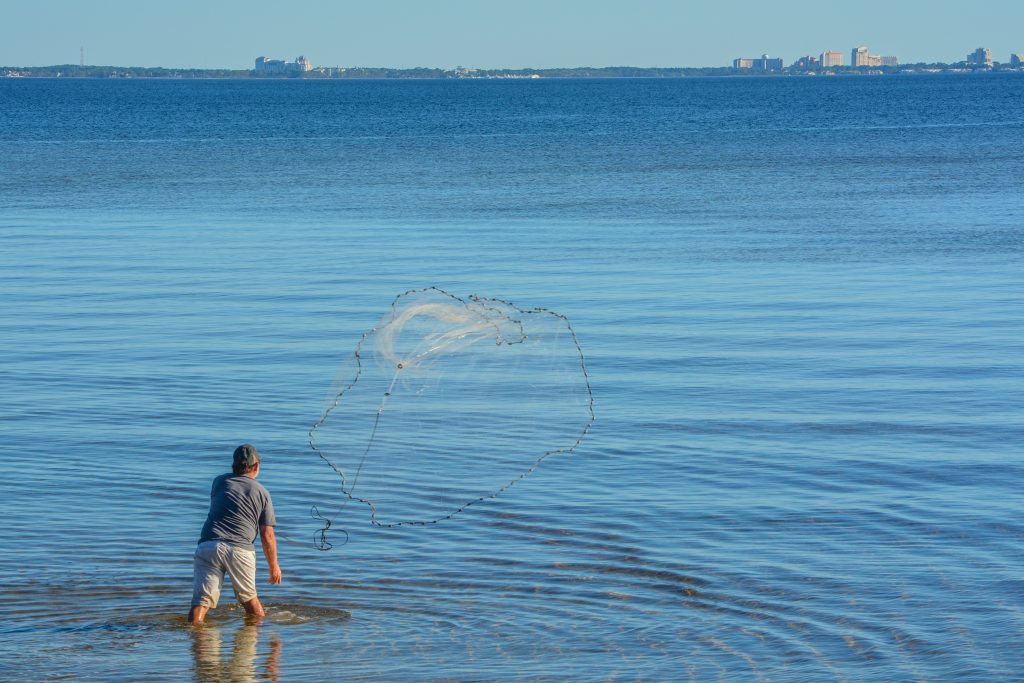
There are several methods for catching live bait, all of which can be successful. One of the most common techniques is cast netting. A cast net is a round, circular net with weights on the bottom to make it sink. These nets vary in size, from small 4-6’ nets for casual use to larger 12’+ nets for commercial purposes or experienced throwers. They also vary in mesh sizes depending on the size of the bait you want to catch. When cast netting, it’s crucial to visually spot the bait on the surface or on your fish finder before throwing the net. Blind throwing can catch some bait but is generally inefficient. Avoid heavy structure and areas with snags, as these can damage the net or cause it to get stuck, leading to costly repairs.
Another effective method for catching bait is the hook-and-line technique. The size of the hook depends on the bait you’re targeting. Smaller baits like pinfish and croakers require smaller hooks, while larger baits like hardtails need sturdier hooks. Fishbites EZ Baits and Fish’n Strips products are particularly useful for this method. The sabiki rig is also effective, especially for catching scaled sardines, cigar minnows, goggle eyes, pilchards, and other small species. This multi-hook rig, fished on lighter inshore rods, works well around gas rigs, ship channel markers, and bridges. Another method, bait trawling, involves dragging nets through certain areas to catch various bait fish and shrimp. However, this method is less environmentally friendly than cast netting or hook and line, as it can indiscriminately catch non-target species and disturb natural habitats.
Keeping Live Bait Alive
A crucial element of live bait chumming is keeping the bait alive. Healthy, lively bait is more attractive to predators than a half-dead bait that may either be ignored or eaten by unwanted bycatch. A quality livewell system with sufficient capacity, water circulation, and aeration is essential for keeping bait healthy. A steady flow of fresh, clean water in the livewell improves water quality, while continued aeration keeps the bait oxygenated and energetic. Avoid overcrowding the livewell, as too much bait in too small a space can stress the fish and reduce their lifespan. Proper handling is also important; be gentle when catching and dehooking the bait, and get it into the livewell as quickly as possible. Maintaining a consistent water temperature in the livewell is another key factor—avoid high and low fluctuations that could shock the bait. Finally, be cautious with chemicals and soaps when cleaning the livewell, as these can leave residues that harm the bait once the tank is refilled.
Target Species for Live Chumming Inshore
Several species in the inshore waters of Coastal Alabama and Northwest Florida respond well to live chumming. Mangrove Snapper, Sheepshead, Redfish, Black Drum, Speckled Trout, and Tarpon are among the species that can be effectively targeted. Mangrove Snapper can be chummed on various structures using live shrimp, finger mullet, small pinfish, pilchards, and other small baits. Sheepshead, Black Drum, and Redfish respond well to chumming with oysters, barnacles, and crabs around bridges, piers, and other structures.
Redfish will also likely respond to menhaden, mullet, pinfish, and croakers, with Jack Crevalle and sharks sometimes joining in. Speckled Trout can be chummed using smaller live croakers, pinfish, mullet, and shrimp along grass flats, docks, oyster beds, and surf zones. Tarpon, often found schooling in surf zones or along bays, respond to pilchards, mullet, and crabs.
Best Live Baits for Inshore Chumming
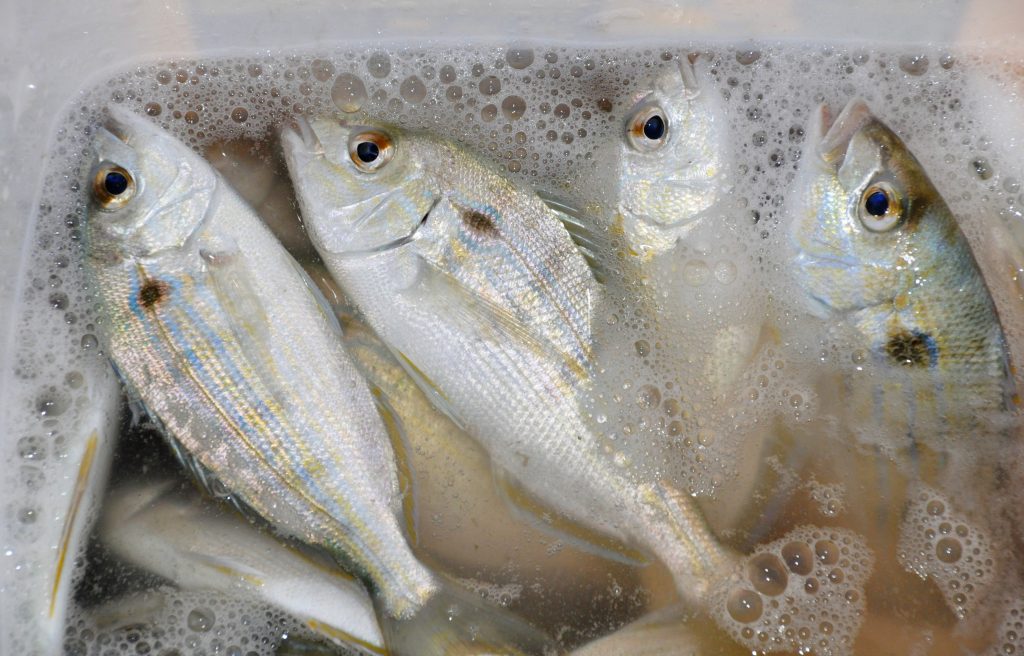
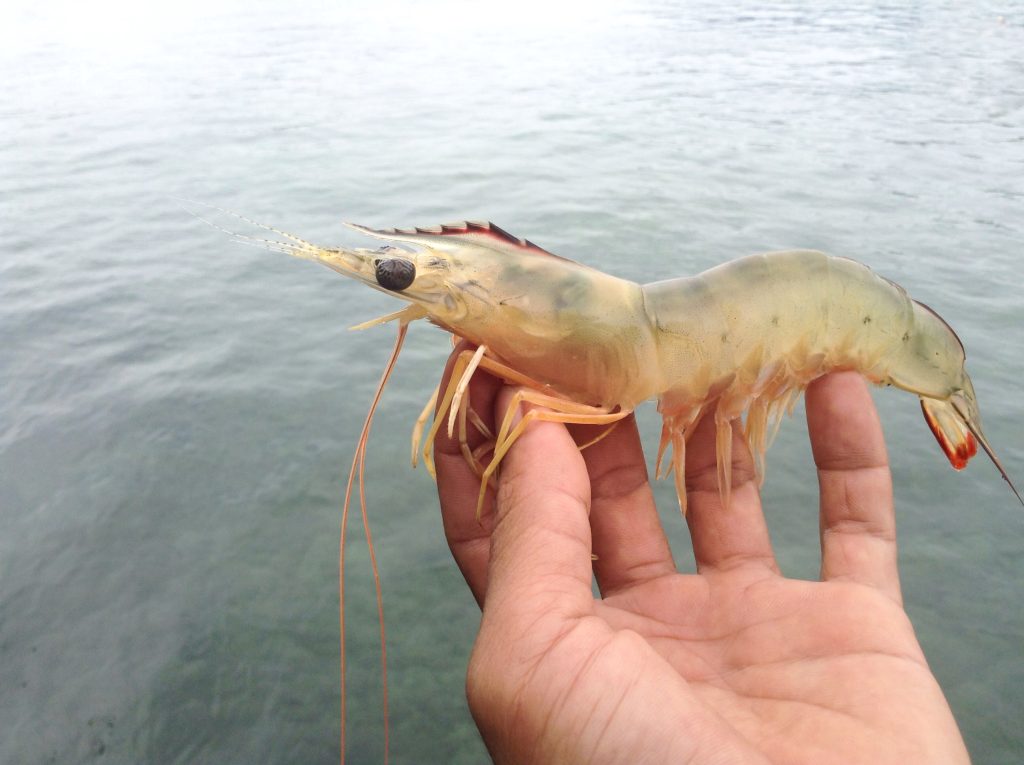
There are many live baits that can be used for chumming inshore, but the most effective due to their universal appeal are smaller-sized pinfish, croakers, finger mullet, and live shrimp. These baits are generally attractive to a wide range of game species, and if the fish are in a frenzy, they likely won’t discriminate between them.
Rigging for Live Chumming Inshore
When rigging for live chumming inshore, it’s important to choose the right setup. For Speckled Trout, a medium-light, medium-action rod with an extra-fast or fast tip works well, paired with a 2500-3000 size spinning reel or a 150 size baitcasting reel. For Sheepshead and drum species, a medium to medium-heavy rod with a fast or moderate tip is ideal, paired with a 3000-5000 size spinning reel or a 200 size baitcasting reel. For Mangrove Snapper, a medium-heavy to heavy rod with a fast or moderate tip is appropriate, paired with a 5000-6000 size spinning reel or a 300-400 size baitcasting reel. For Tarpon, heavy to extra-heavy rods with fast or moderate tips are necessary, paired with an 8000-14000 size spinning reel or a 400+ size baitcasting reel.

The line rating for each setup should match the size of the game fish being targeted. Lighter leaders and properly sized hooks will help with the bite. For Speckled Trout, 10-25# fluorocarbon leaders with circle hooks or J hooks should be used, depending on the bait size, with hooks not exceeding 3/0. For Sheepshead and drum species, 20-40# fluorocarbon leaders with circle hooks up to 5/0-6/0 will work, with J hooks up to 3/0 for Sheepshead. Mangrove Snapper often require light leaders, sometimes as low as 20# in certain scenarios, though 30-40# is usually sufficient. For Tarpon, 40-80# fluorocarbon leaders with 5/0-7/0 circle hooks are recommended. In all live bait chumming scenarios, free-lining the bait within the chum is the best approach. In heavy currents, a small split shot or knocker rig can be used to keep the bait down slightly.
Techniques for Live Chumming Inshore
There are two primary techniques for live chumming inshore. The most prominent is hand tossing or using a modified bat or scoop to throw out multiple baits at a time. Consistency and spreading the baits over the target area are key. The other method is drip chumming, where a bucket filled with live bait is hung off the side of the boat or dock, slowly releasing bait to create a constant presence and scent trail. While effective, this method is less popular than hand-tossing or scooping.
Target Species for Live Chumming Offshore
Offshore, live chumming can target a wide variety of species. Tuna, Mahi-Mahi, Amberjack, King Mackerel, Wahoo, Snapper, Grouper, Marlin, Swordfish, and Sailfish are among the species that respond well to this technique. Tuna respond well to pilchards, sardines, and menhaden. Mahi-Mahi prefer pilchards, sardines, and other small baits. Amberjack can be coaxed up with hardtails, small pinfish, cigar minnows, or even large shrimp.
King Mackerel are attracted to sardines, cigar minnows, mullet, and small mackerel species. Wahoo go after sardines, pilchards, cigar minnows, ballyhoo, and flying fish, while Sailfish chase ballyhoo, pilchards, sardines, and small mackerels. Snapper will sometimes chase menhaden and small pinfish all the way to the surface, and Grouper may come off the bottom to investigate live pinfish, croakers, and grunts.
Best Live Baits for Offshore Chumming
When live chumming offshore, there are several ideal baits, including live pilchards, sardines, hardtails, cigar minnows, and mullet. These baits are versatile and effective across a range of species.
Rigging for Live Chumming Offshore
Rigging for live chumming offshore is slightly different from inshore setups, requiring stouter and larger gear. Tuna fishing leaders can range from 30# to 80#, with circle hooks varying from 5/0-7/0. When targeting Amberjack, leaders may need to be as heavy as 100-200#, with hooks ranging from 7/0-10/0. Snapper may require smaller leaders, typically 40-60# fluorocarbon with 4/0-8/0 circle hooks, depending on the snapper size. Mahi-Mahi may need lighter leaders, down to 30-40#, with 2/0-4/0 circle hooks depending on the dolphin size and the baits being used. The freelining technique is crucial, hiding the bait on your hook within the cloud of live bait being thrown out. When targeting bottom fish, a small egg weight can be used to create a knocker rig, allowing the bait to sink further down the water column.
Techniques for Live Chumming Offshore
Several live chumming techniques are effective offshore. Drift chumming involves a bucket of live bait left on the side of the boat, releasing bait as the boat drifts. This method is best for Mahi-Mahi, King Mackerel, and sometimes Tuna. Bait and switch is a traditional method used for Marlin, where live bait is used to bring the target species to the surface before switching to lures or different bait. Locating fish on the fishfinder allows anglers to mark fish in the middle of the water column, then use live bait to coax them to the surface. This method involves deploying multiple baits using a bat or scoop, and occasionally revving the engines to disperse bait into the propwash and attract game fish. Hand slinging, similar to inshore techniques, involves consistently tossing out baits by hand to maintain the interest of fish in the area. This method is effective for Cobia, Snapper, Mackerel, Wahoo, Tuna, and Sailfish.